
3 Key Takeaways
- Peptides are backed by science – peer-reviewed evidence supports signal and neurotransmitter peptides. Results are gradual but real, and they work best alongside other actives.
- Peptides serums and retinol do different jobs – retinol speeds up cell turnover; peptides stimulate collagen and soften expression lines. You don’t have to choose.
- “Topical alternative to injections” needs a disclaimer – peptide serums can soften expression lines over time, but they cannot replicate what injectable treatments like botulinum toxin can do.
If you’ve been looking at anti-aging skincare lately, you have probably come across peptides. Known for stimulating collagen and smoothing fine lines, peptides appear in almost everything. Serums, moisturizers, and eye creams are the most common formulations with claims such as firming, lifting, and youth-restoring.
If you’re curious about peptides and where they fit in your anti-aging routine, continue reading. In this post, we cover what peptides actually do, how they compare to retinol, what to expect from a peptide serum, and how to use both together in your routine.
What are Peptides?
Peptides are short chains of amino acids, the same building blocks that make up proteins like collagen and elastin. If we, for instance, consider collagen as a long rope, peptides as the shorter strands it is twisted from. Both are made of the same amino acids, but are different in chain length (which changes their function).
The body already produces peptides, acting as signaling molecules. They instruct cells to perform specific functions, including wound healing, collagen synthesis, and skin barrier repair. The issue is that collagen production declines from your mid-twenties onward. Factors like UV exposure, smoking, and chronic inflammation speed up its breakdown further.
This is where topical peptides come in. Because they are smaller than full proteins, they can penetrate the skin’s upper layers (depending on their type), triggering a response from the cells below.
What are the different types of peptides?
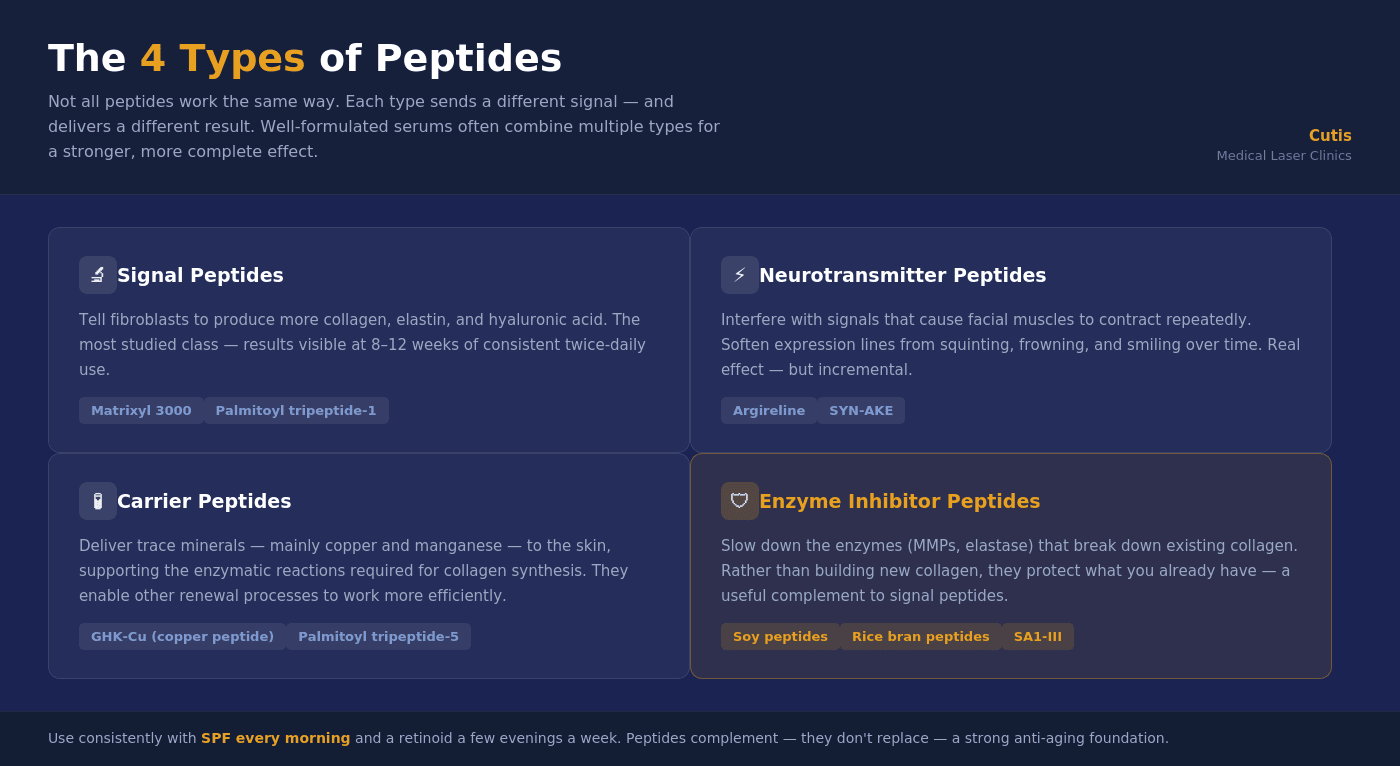
Peptides fall under four main categories:
- Signal peptides tell the skin to produce more collagen and elastin. Palmitoyl tripeptide-1 and palmitoyl tetrapeptide-7 (forming Matrixyl 3000) are the most studied in this category.
- Carrier peptides deliver trace minerals like copper and manganese, which support collagen synthesis.
- Enzyme inhibitor peptides slow down the enzymes that break down existing collagen, helping preserve what you already have.
- Neurotransmitter peptides interfere with the chemical signals that tell facial muscles to contract. Argireline and SYN-AKE are the most recognized in this group, known for reducing the depth of expression lines.
What the Research Actually Says
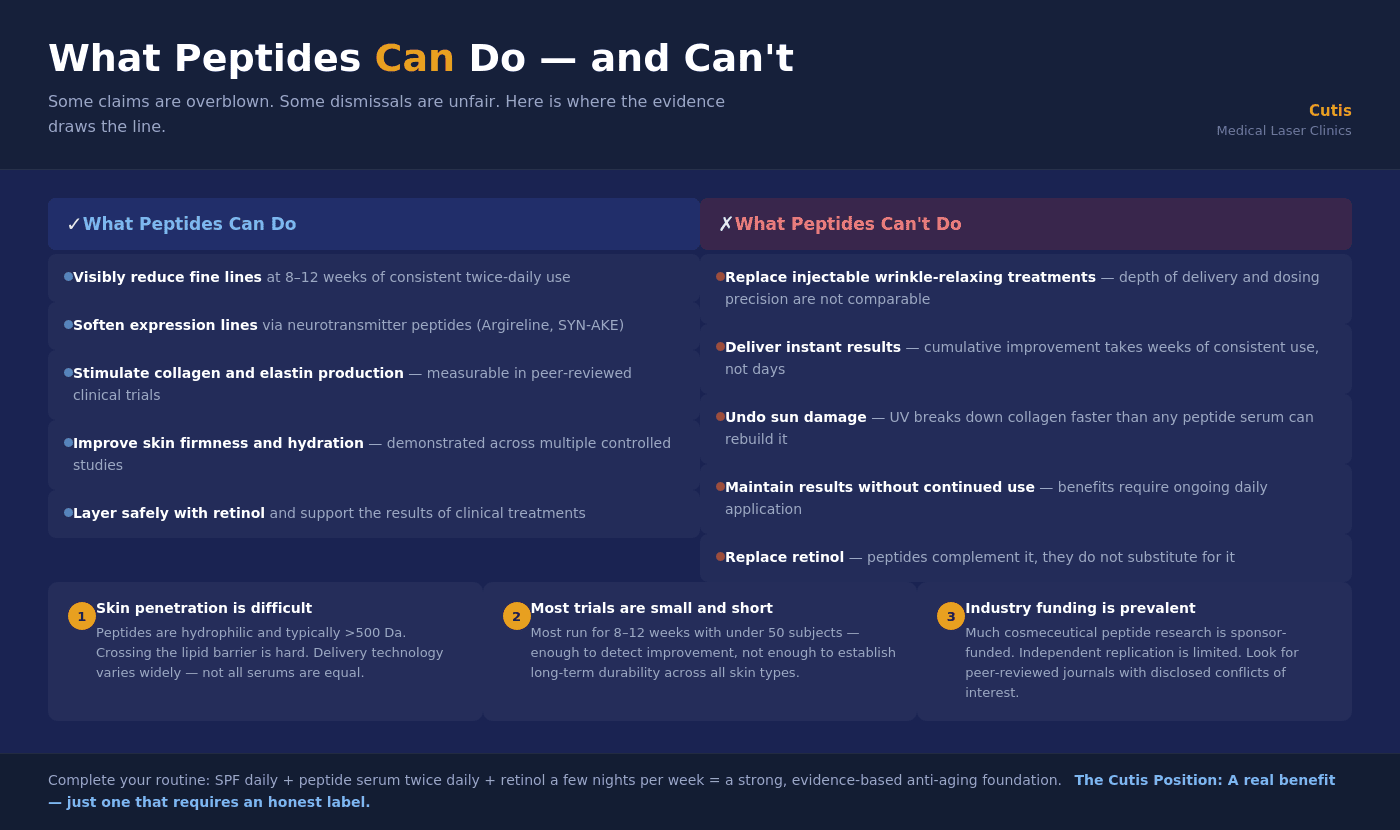
While the science behind topical peptides is more solid than skeptics suggest, it is also more modest than many brands claim.
The short version: Quality peptide serums offer real, incremental, and cumulative (not dramatic) results. Retinol remains the most supported topical anti-aging ingredient.
Peptides are useful and well-evidenced, and can be a good part of your anti-aging routine.

What the Evidence Does Not Show
- No topical peptide replicates the results of injectable wrinkle-relaxing treatments (botulinum toxin).
- Both peptides and neurotoxins target neuromuscular signaling in theory, but the delivery method, depth, and duration of effects are not comparable.
- A serum reaches the dermis. An injectable (at a medically calibrated dose) delivers its active directly into the muscles.
- Topical peptides and neurotoxins are different interventions. Conflating them misleads patients.
Where P-TIOX Fits In
P-TIOX Peptide Serum (from SkinCeuticals), which we carry at Cutis, combines a multi-peptide blend. It is specifically formulated to target expression lines, caused by repetitive movement, like squinting, frowning, and smiling. It is physician-tested and designed to address nine expression line zones across the face.
The formulation draws on the same neurotransmitter and signal peptide science outlined above. When used consistently as part of a daily routine, it can visibly soften the appearance of fine lines over time. This is particularly true for patients who are already following a solid foundation of sun protection, hydration, and general skin health.
Note: P-TIOX Peptide Serum is not a substitute for a clinical consultation. If you are dealing with dynamic wrinkles and want significant, lasting correction, a consultation with a doctor is a must.
But for those who want to slow the formation of new lines, maintain results between clinical treatments, or support their skin’s collagen architecture over time, a well-formulated peptide serum is a useful addition to a routine.
Peptide Serum vs Retinol: Do You Have to Choose?
The short answer is: no. Retinol and peptides work through entirely different mechanisms and can complement each other well when layered correctly.
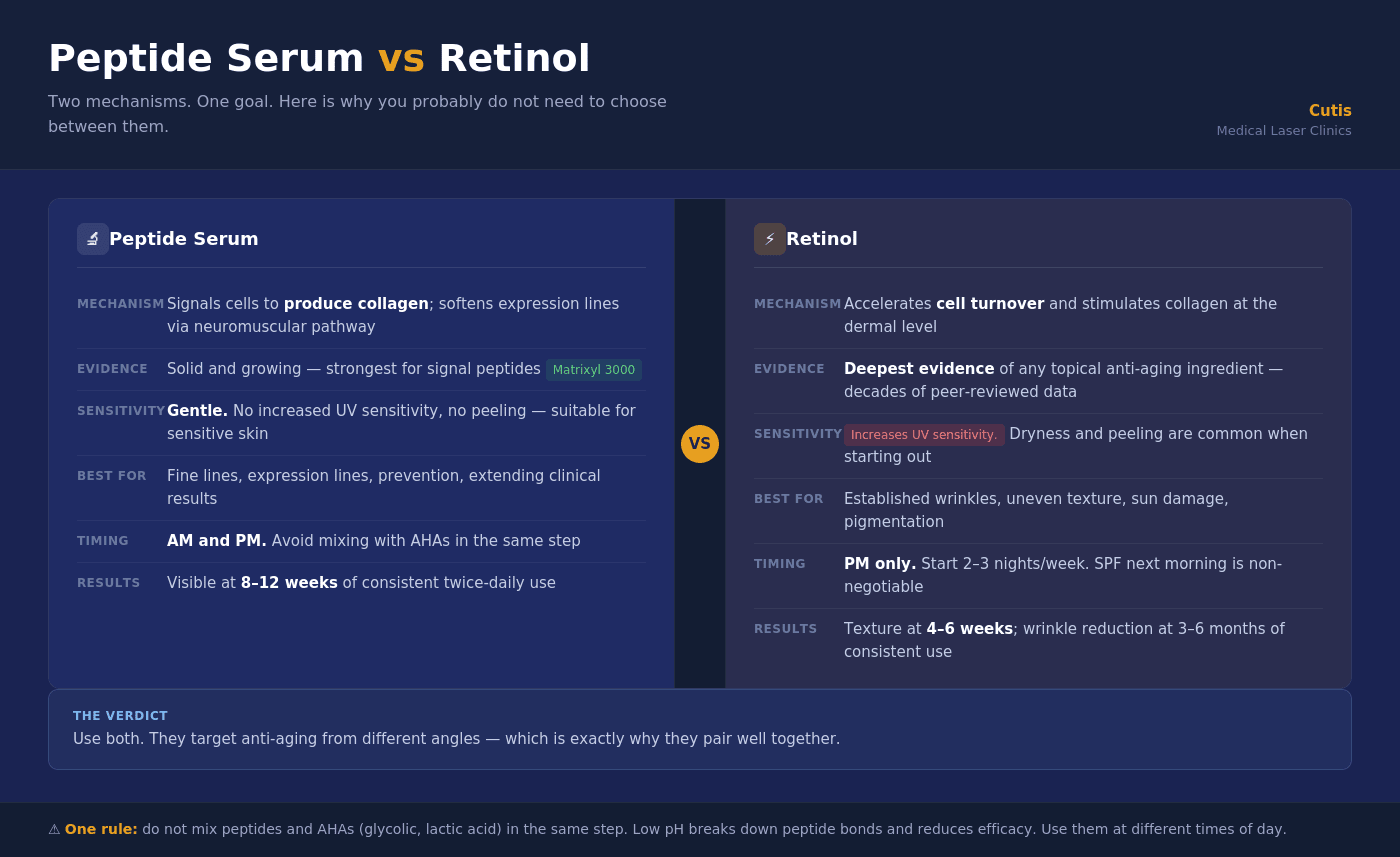
Note: Do not mix peptides in the same step as alpha-hydroxy acids (AHAs) like glycolic or lactic acid. At low pH, AHAs can break down peptide bonds and reduce their efficacy. Use them at different times of day, or on different evenings.
How to Layer Peptides in Your Routine
| Morning Routine | Evening Routine |
|
|
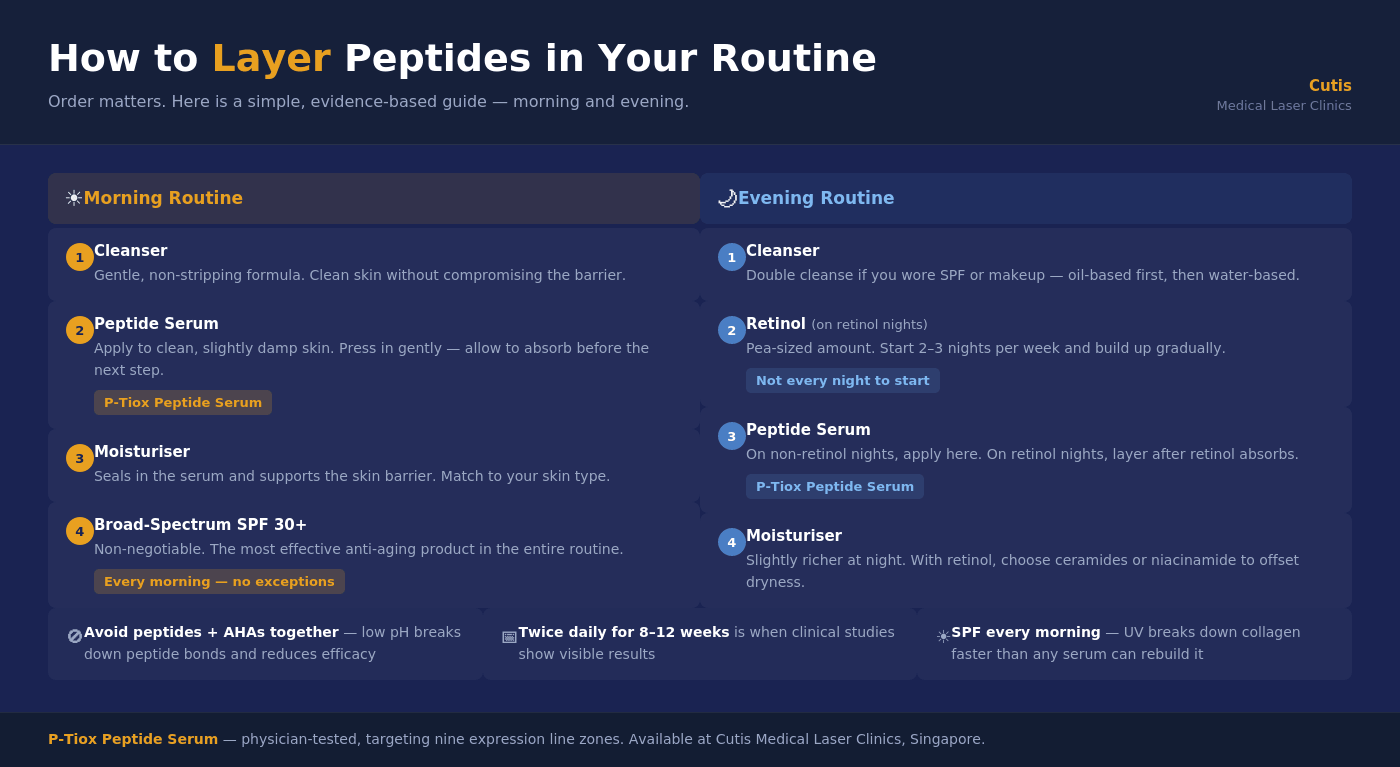
Keep in mind:
- Peptide serums work best on skin that is consistently moisturized and protected from UV. You cannot out-serum unprotected sun exposure.
- Start with peptides in the morning if you are new to retinol. Introducing both at once makes it hard to know which product your skin is reacting to.
- Consistency matters more than frequency. Twice daily for 8 to 12 weeks is where clinical studies show visible results.
The Truth About Peptides Being an Alternative to Anti-Wrinkle Injectables
The term “topical alternative to anti-wrinkle injectables” generates a fair amount of content that ranges from misleading to false.
The Truth: Some peptides can reduce the appearance of expression lines through repeated, consistent topical use. The effect is real and measurable in studies. It is also incremental, not instant, and it does not persist if you stop using the product.
Injectable wrinkle-relaxing treatments, administered by a trained medical professional at a regulated clinic, work at a different depth and approach. They are not the same category of intervention, and no serum should be presented as a clinical equivalent.
What a good peptide serum can do is give you a meaningful, low-risk tool for slowing the visible progression of expression lines. This is especially true when your skincare routine also includes retinol, SPF, and proper hydration.
For patients who already receive clinical treatments, a peptide serum can help extend and support results between sessions. That is a genuine benefit. It just requires an honest label.
Building a Routine That Works
Skincare is not a competition between ingredients. Great routines are the ones that combine what the evidence supports: sun protection every morning, a retinoid or retinol a few evenings a week, consistent hydration, and a targeted active (like a well-formulated peptide serum) to address specific concerns.
If you are unsure where to start, or if you want a personalized assessment of which products and treatments are most appropriate for your skin, our aesthetic doctors at Cutis are happy to help. WhatsApp us at +65 9780 2079 to learn more or book a consultation.
To share, click on the Icon.