
3 Key Takeaways
- Fat cells and skin tissue need different treatments. Cryolipolysis reduces fat; acoustic shockwave improves skin texture and connective tissue. One cannot do the other’s job.
- These treatments are not a substitute for weight loss. Cryolipolysis reduces fat thickness/volume in the treated area; it does not affect overall body weight, visceral fat, or metabolic health.
- GLP-1 medications are changing what patients need. Weight loss from GLP-1s often leaves residual skin laxity, which is why acoustic shockwave is increasingly part of the body contouring conversation.
If you’ve been considering non-surgical body contouring, you’ve likely come across fat freezing (CoolSculpting Elite, ZLipo). While it’s effective in targeting stubborn fat, another non-invasive treatment can enhance its results and promote skin tightening. Acoustic shockwave therapy further breaks down fat cells and makes the skin firmer.
Continue reading as our aesthetic clinic in Singapore explains how each treatment works, what they can realistically do, where each one falls short on its own, and why a combined approach often makes more sense.
The Science: Why Fat Cells Are Vulnerable to Cold
Cryolipolysis or fat freezing uses controlled cooling temperatures to break down fat cells. Compared to water-rich cells, fat cells are highly susceptible to the effects of cold. While fat cells (adipocytes) freeze, the surrounding structures, like skin, nerves, and blood vessels, are not affected.
How the temperature difference works:
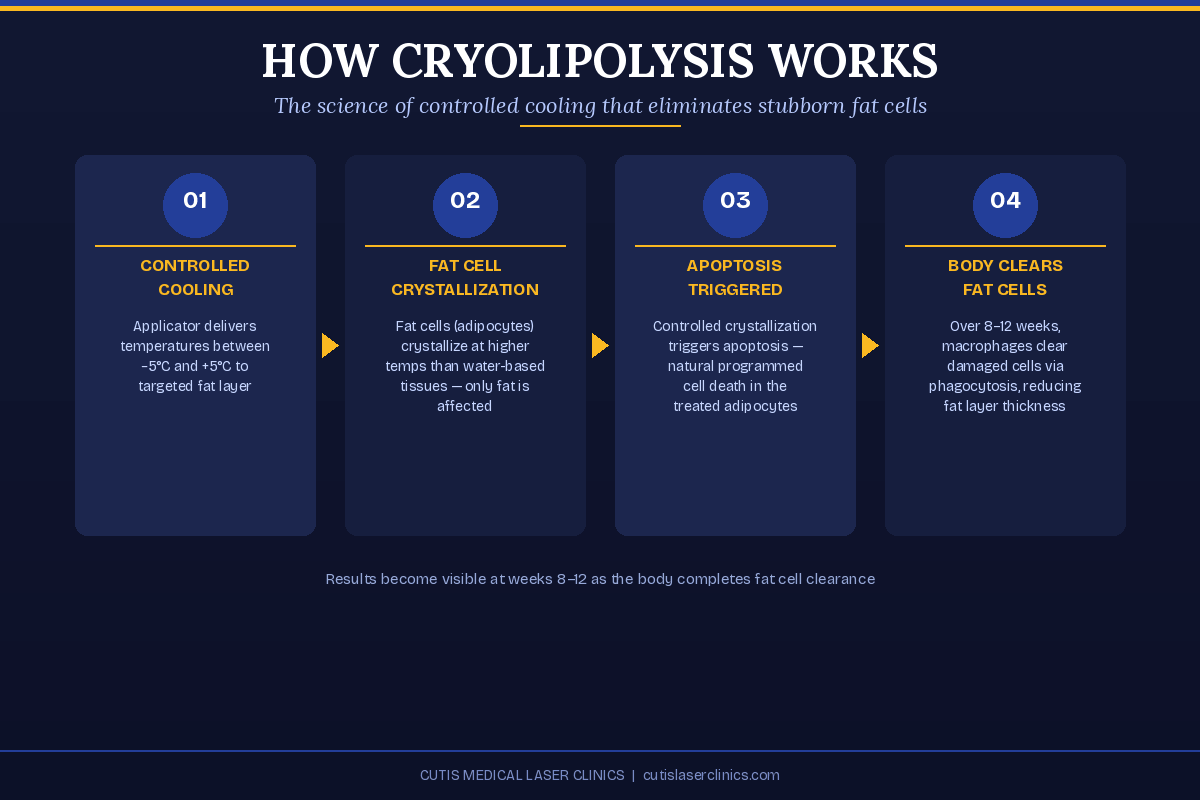
- Water-based tissues (like skin, muscle, and nerves) need temperatures well below the freezing point of 0°C to crystallize. They can withstand temperatures down to -10°C without experiencing cellular damage.
- Adipocytes have a higher lipid content (mostly saturated triglycerides). Because of this, they crystallize at a higher temperature than water-based cellular tissues.
- A controlled cooling window exists, roughly between −5°C and +5°C. This is cold enough to trigger crystallization-triggered apoptosis, but warm enough to keep the remaining tissues and skin layers unharmed.
What happens after a treatment session:
- The body’s inflammatory response clears the damaged fat cells through a process called phagocytosis, where macrophages engulf and remove the cellular debris.
- This unfolds over approximately 8 to 12 weeks, which is why results from Cryolipolysis are not immediate.
Manstein et al. (2008) coined the term Cryolipolysis (also called selective cryolysis) in their foundational study published in Lasers in Surgery and Medicine. Succeeding studies have confirmed a localized reduction in the subcutaneous fat layer in treated areas. The keyword here is localized, which means fat cells in adjacent, untreated areas are not affected.
For further reading: 5 Questions to Know if Fat Freezing is Right for You
What Cryolipolysis Does and Doesn’t Do
CoolSculpting Elite and ZLipo: The Two Systems Available at Cutis
At Cutis Medical Laser Clinics, Cryolipolysis is available through two devices: CoolSculpting Elite and ZLipo.
CoolSculpting Elite is the updated version of the original CoolSculpting system. It is US FDA-approved, and features redesigned applicators that can treat more surface area per cycle. It has C-shaped applicators for maximized skin contact with two applicators that can be used simultaneously.
ZLipo, by Zimmer Aesthetics, is European CE-Certified and uses a comparable controlled-cooling mechanism. It has two connected handpieces that can be used together to target more fat. ZLipo has 360-degree cooling handpieces and is suitable for patients where the applicator fit or treatment area geometry differs.
Both work on the same Cryolipolysis principle described above. Applicator selection and cycle planning are determined after a doctor-level assessment, not something that you can know from a web search.
Treatable Areas
Cryolipolysis is used on areas where there is sufficient subcutaneous fat to draw into the applicator. Commonly treated sites include the:
- Abdomen
- Flanks
- Upper arms
- Back
- Inner and outer thighs
- Under the chin and jawline
Fat freezing is not suitable for visceral fat, or the fat stored inside the abdominal cavity around the organs. This does not sit underneath the skin and cannot be reached by external cooling.
For further reading:Stubborn Deposits: Why Are Some Fats Harder to Lose Than Others?
What It Cannot Address
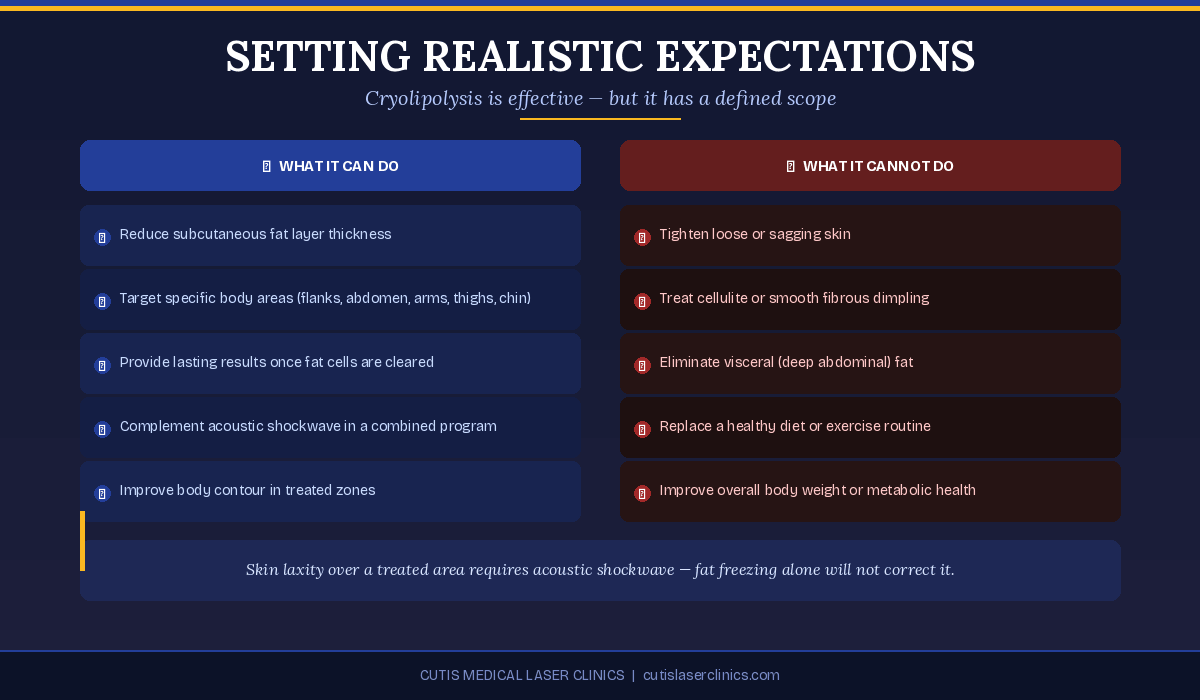
Cryolipolysis is effective at targeting stubborn fat, but it DOES NOT:
- Tighten skin
- Improve skin texture
- Treat or improve cellulite dimpling, or the fibrous bands that create the dimpled appearance associated with cellulite
- Replace a healthy diet and exercise
It reduces the volume of subcutaneous fat in a treated area. If there is skin laxity over that area (can be due to pre-existing or as a consequence of fat reduction), fat freezing will not correct it.
A note on realistic outcomes: Published data on Cryolipolysis generally report a reduction in fat layer thickness in the treated area, with figures varying by study, applicator, and site.
Individual outcomes depend on starting fat thickness, number of treatment cycles, and the body’s inflammatory clearance process. A single session does not produce the same result as two or three sessions over a program.
Acoustic Shockwave Therapy: A Different Mechanism Entirely
Acoustic shockwave therapy is sometimes referred to as radial shockwave or extracorporeal pulse activation therapy. It works on the connective tissue matrix rather than on fat cells directly. As it targets a different layer of tissue entirely, it complements Cryolipolysis instead of duplicating it.
What Shockwave Actually Does to Tissue
Acoustic shockwave uses high-energy acoustic waves and targeted vibrations to make the skin firmer and tighter. At Cutis, we use two US FDA-cleared acoustic shockwave devices:
- X-Wave – uses targeted vibrations directed at the connective tissues. It helps:
- Breaks down fat under the skin
- Stimulate lymphatic drainage to remove toxins
- Stimulate collagen production, which improves skin texture, cellulite, and stretch marks.
- ZWave – delivers radial shockwaves that destabilize fat structure. It helps:
- Break down connective tissues that cause cellulite
- Improve blood circulation and lymphatic drainage
- Stimulates collagen formation.
Acoustic shockwave helps provide noticeable results in cellulite reduction, scar appearance improvement, and tightening of loose skin.
Cellulite: Why It Requires a Different Approach
Cellulite forms when fat pushes through the fibrous bands that connect the skin to the underlying muscle. Cryolipolysis alone does not loosen these bands. There are also cases where reducing fat volume without addressing the fibrous bands can make surface irregularities more visible.
Acoustic shockwave therapy acts on these fibrous bands mechanically. By disrupting and remodeling the tissue, it can reduce the tension that creates the dimpled surface appearance. This is why it is beneficial not only for cellulite treatment in Singapore but also for post-fat-reduction skin quality.
Why These Two Treatments Are Often Combined in a Body Program
Combining Cryolipolysis with acoustic shockwave therapy is not a marketing gimmick. It follows the fact that each treatment targets a different tissue and works through a different mechanism.
After a Cryolipolysis session, the body spends the following weeks clearing the damaged fat cells. There is evidence suggesting that applying acoustic shockwave to the treated area during this window may support lymphatic drainage and improve the skin surface response as the fat layer reduces.
Whether shockwave is applied on the same day as fat freezing or scheduled as a separate session is a clinical decision. There is no single protocol that applies to everyone.
The two treatments address different layers and different tissue targets:
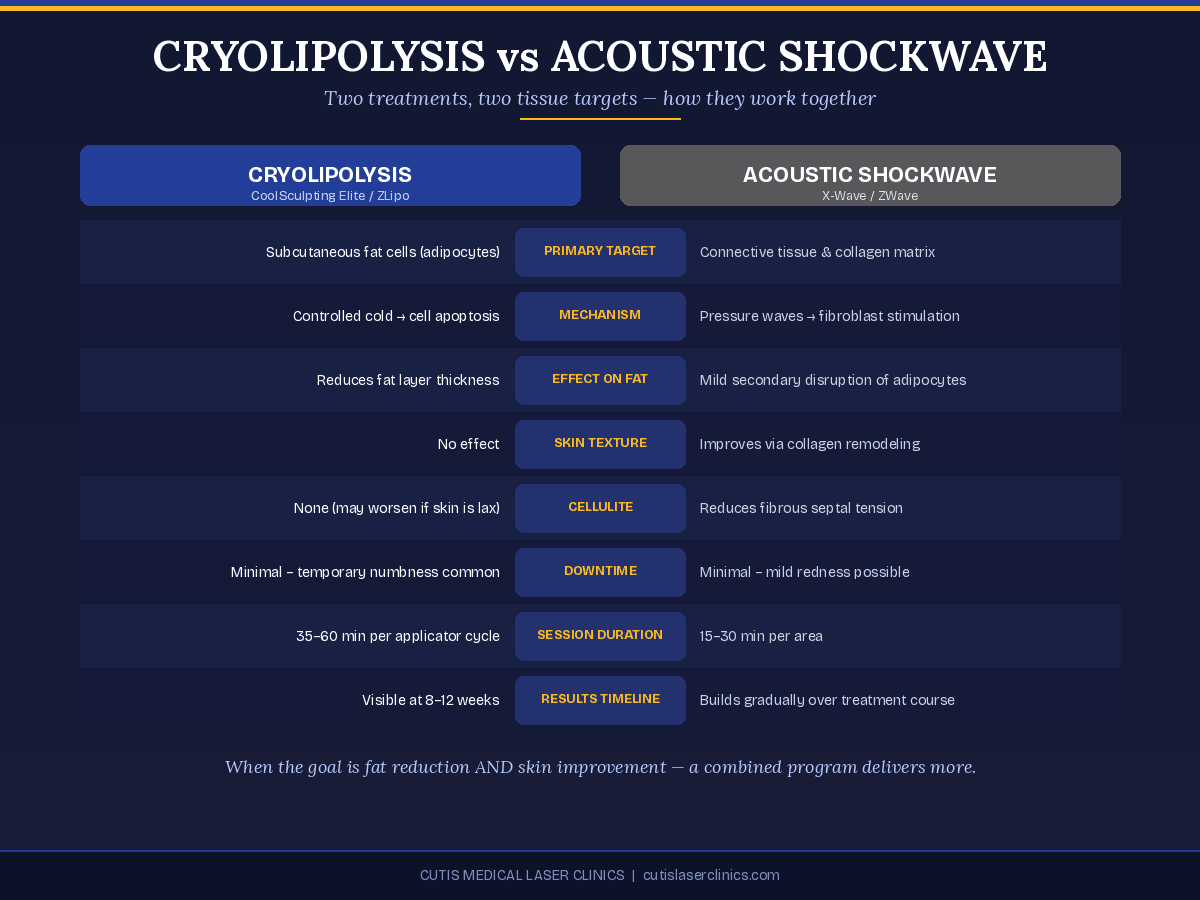
When the goal is both fat volume reduction and improved surface texture, a program that includes both modalities is more comprehensive than either alone. This, however, is not a universal recommendation. It still depends on individual anatomy, goals, and condition. A doctor consultation is necessary to determine whether one or both are appropriate.
The GLP-1 Context: Why Skin Elasticity Matters More Than Ever
Originally developed for type 2 diabetes management, GLP-1 medications are now more widely prescribed for weight management. This is continuously changing the landscape of body contouring consultations not only in Singapore, but also globally.
The medications can help patients achieve meaningful weight loss. However, weight loss of this kind, especially when it happens relatively quickly, does not automatically improve skin elasticity.
Skin that has been stretched due to excess fat does not simply contract once that volume is gone. How well it adapts depends on factors like age, genetics, collagen quality, and how fast the weight came off.
The result is that a growing number of patients who have lost weight on GLP-1 medications are left with residual skin laxity. This is not a failure of the medication. It is a separate concern that needs a separate approach.
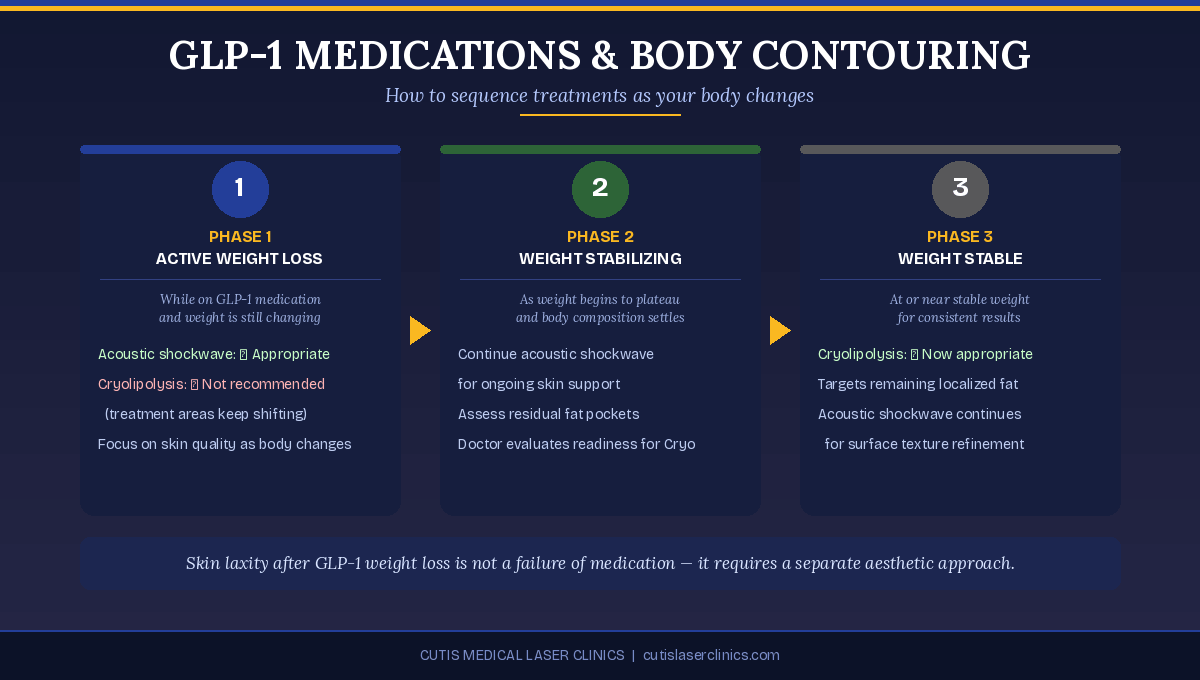
Where Body Contouring Fits in the GLP-1 Pathway
For patients actively on GLP-1 medications, timing matters more than for those at a stable weight.
Fat freezing is generally not recommended while weight is still changing or treatment areas keep shifting, which makes results less predictable. Acoustic shockwave, on the other hand, can be considered during or after the weight-loss phase to support skin quality as the body changes.
For further reading: GLP-1 and Weight Loss: The Science Behind the Results
Once weight has stabilized, any remaining localized fat pockets (areas the medication did not fully address) may be suitable for Cryolipolysis. The pattern seen increasingly in clinics: shockwave or similar procedures during and after weight loss, fat freezing once weight is stable.
A note on GLP-1 medications: These are prescription medications in Singapore. A doctor should oversee their use to assess suitability, monitor for side effects, and factor in any aesthetic treatments as part of the patient’s overall care. Body contouring is not a substitute for medical weight management.
What Realistic Timelines Look Like
Misaligned expectations about timing are one of the most common sources of disappointment in non-surgical body contouring. Neither Cryolipolysis nor acoustic shockwave therapy delivers results overnight.
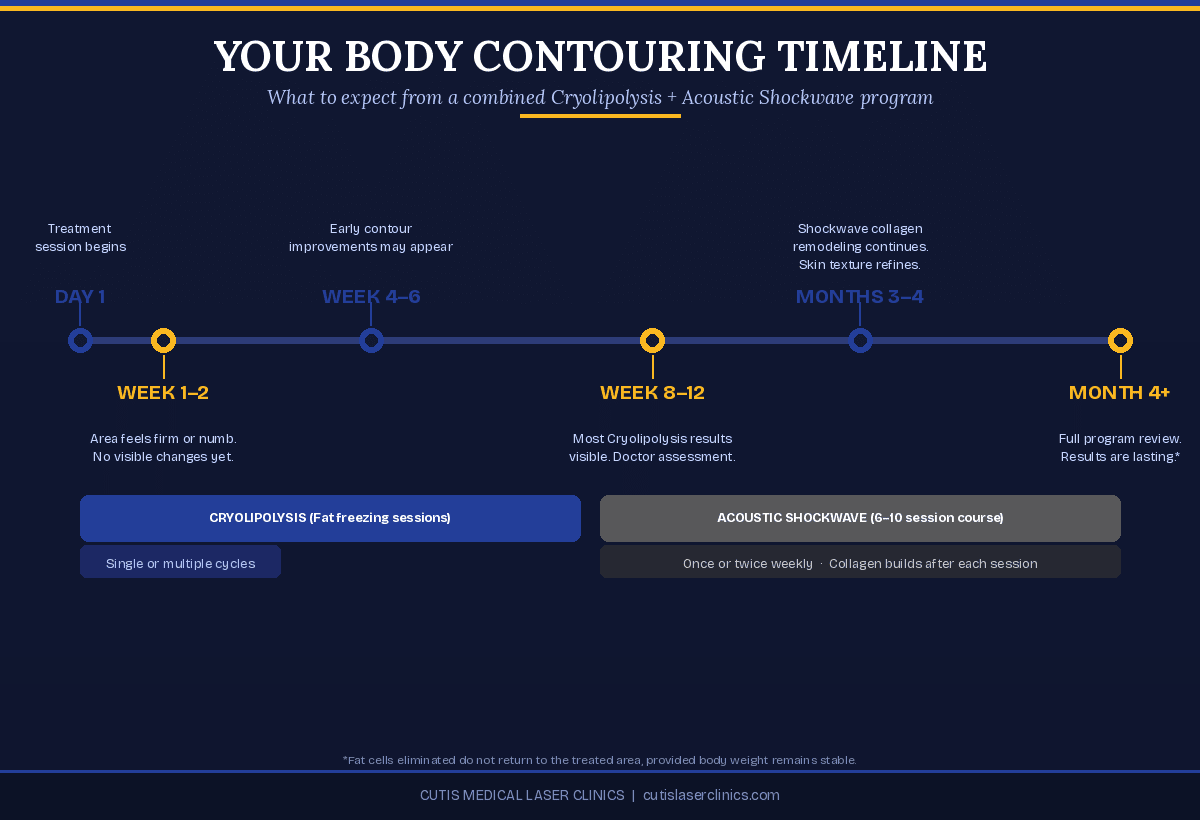
Cryolipolysis timeline:
- Weeks 1–2: The treated area may feel firm, numb, or tender. Some temporary swelling is normal. No visible fat reduction yet; the body has started clearing the treated fat cells, but this takes time.
- Weeks 4–6: Clearance is progressing. Some patients start to notice early improvements in contour (though this varies).
- Weeks 8–12: Most of the visible results from a single Cryolipolysis cycle are apparent by this point. This is typically when a doctor will assess whether additional cycles are needed.
Acoustic shockwave timeline:
- Sessions are usually scheduled as a course of 6–10 treatments, once or twice a week.
- Collagen remodeling continues for weeks after the course ends, so skin texture improvements build gradually rather than appearing all at once.
Full program assessment: 3–4 months
A reasonable endpoint for reviewing the combined outcome of a body contouring program is around 3 to 4 months from the start of treatment. Photographs taken at baseline are essential to compare changes.
One thing worth noting: once fat cells are eliminated, they do not return to the treated area as long as body weight remains stable. Adjacent untreated fat cells can still expand with weight gain. This is why these treatments work best for patients who are at or near a stable weight.
Is a Consultation the Right First Step?
Non-surgical body contouring is not a one-size-fits-all category. Whether Cryolipolysis, acoustic shockwave, or a combination program is appropriate depends on a physical assessment of the area, skin condition, weight history, current medications, and realistic goals.
At Cutis Medical Laser Clinics, body contouring assessments are conducted by doctors. Applicator selection, treatment sequencing, and contraindication screening are clinical decisions, not aesthetic ones.
If you want to understand what would be suitable for your specific situation, a consultation is the right first step. WhatsApp us at +65 9780 2079 to get started.
To share, click on the Icon.