
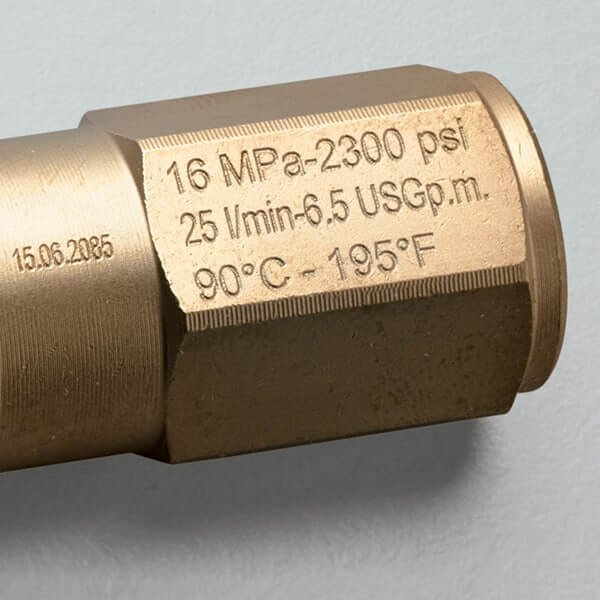
Laser marking has become a crucial technology across industries in the UK, offering precise, permanent, and versatile solutions for product identification and branding. If you’ve ever wondered what laser marking is and how it achieves such detailed results, this guide will break down the technical principles behind the process and its practical applications.
What Is Laser Marking?
Laser marking is a non-contact process that uses a focused laser beam to create permanent marks on the surface of a material. Unlike traditional methods such as engraving or stamping, laser marking does not require physical contact or tooling, making it highly accurate and suitable for delicate or high-precision components.
The marks created by laser marking can take many forms, including:
- Etching: Slightly removing the surface layer to produce visible contrast.
- Annealing: Changing the color of metals without breaking the surface.
- Foaming: Creating raised marks in plastics through controlled vaporization.
- Carbonising: Darkening the surface of certain materials, such as wood or leather, to form high-contrast marks.
In the UK, laser marking is widely used in sectors like automotive, aerospace, electronics, and medical device manufacturing due to its durability, speed, and compliance with traceability regulations.
How Laser Marking Works
Understanding how laser marking works requires knowledge of the interaction between laser energy and material surfaces. The process typically involves three main components:
- Laser Source: The laser emits a highly concentrated beam of light. The type of laser (fiber, CO₂, or UV) is selected based on the material and the desired marking effect.
- Beam Delivery System: Mirrors and lenses guide the laser beam to the target surface with extreme precision. In many industrial setups, galvanometer scanners rapidly direct the beam along the required pattern.
- Material Interaction: When the laser hits the material, its energy either removes, melts, or alters the surface layer, producing a permanent mark. The depth, contrast, and appearance of the mark are controlled by adjusting parameters such as power, speed, frequency, and pulse duration.
This precise control allows laser marking to produce micro-scale text, barcodes, QR codes, logos, and serial numbers without damaging the underlying material. The non-contact nature of the process also minimizes wear and maintenance compared to traditional marking methods.
Advantages of Laser Marking
Laser marking offers several benefits that make it the preferred choice for UK manufacturers:
- Durability: Marks are resistant to abrasion, heat, and chemicals.
- Precision: High-resolution markings are possible even on very small surfaces.
- Flexibility: Compatible with metals, plastics, ceramics, and composites.
- Speed: Rapid marking reduces production time and improves efficiency.
- Cost-Effective: Eliminates the need for consumables like ink or stamps.
Applications in the UK
Industries across the UK leverage laser marking for a variety of purposes:
- Automotive: VIN numbers, component traceability, and branding.
- Electronics: Serial numbers, safety labels, and circuit board markings.
- Medical Devices: Compliance marking for instruments and implants.
- Aerospace: Part identification and anti-counterfeiting measures.
With its precision and adaptability, laser marking has become an essential technology for any manufacturer focused on quality, traceability, and brand integrity.
Conclusion
If you’re exploring modern, reliable, and high-precision marking solutions, understanding what laser marking is and how laser marking works is the first step. By using focused laser energy, manufacturers across the UK can achieve permanent, detailed, and durable marks on a wide range of materials — making laser marking an indispensable tool in today’s industrial landscape.