
3 Key Takeaways:
- Sensitive skin is more prone to pigmentation due to chronic inflammation and a compromised/weakened skin barrier.
- Gentle, gradual treatments are safer and more effective than harsh treatments or aggressive approaches.
- Professional guidance and consistent sun protection are essential to preventing pigmentation recurrence.
Sensitive skin itself comes with unique care challenges, especially with additional skin concerns like pigmentation. With a compromised barrier that reacts easily to various stressors, even mild products can trigger irritation. This makes pigmentation treatment more challenging, as extra care is needed to avoid further sensitivity.
Continue reading as our aesthetic clinic in Singapore explores what makes skin sensitive, why it is more prone to pigmentation, and safe treatment options. We also offer a few tips on how to prevent pigmentation recurrence and explain why early intervention works best for pigmentation treatment.
So, what makes skin “sensitive”?
While many people use “sensitive skin” to describe their skin, it isn’t a specific medical diagnosis. Skin sensitivity, moreover, can mean different things to different people, as its symptoms, triggers, and causes vary. Essentially, it refers to skin that is easily irritated, inflamed, or experiences unpleasant sensations like itching or burning.
Sensitive skin is more of a catch-all term for skin with less tolerance to topical products and external conditions. It reacts more strongly to environmental or chemical stimuli with common characteristics, such as:
- Redness or flushing
- Dryness, peeling, or feeling of tightness
- Stinging, swelling, or burning sensations
- Itchiness
- Prone to inflammation after acne or minor injuries
For further reading: 5 Misconceptions About Sensitive Skin
Why is sensitive skin more prone to pigmentation?
Sensitive skin has a compromised skin barrier that is more reactive to chemical, environmental, and even psychological triggers. This heightened reactivity can lead to inflammation, which is known to trigger post-inflammatory hyperpigmentation (PIH).
As a response to inflammation, melanocytes (pigment-producing cells) go into overdrive. It triggers inflammatory signaling when the skin experiences stress or trauma, which can be due to sun exposure, heat, acne, hormones, or aggressive skincare. This releases signaling molecules, including cytokines, prostaglandins, and reactive oxygen species (ROS).
As a defense response to inflammation, these molecules serve as signals, telling the melanocytes to increase melanin synthesis. This then leads to an overproduction of melanin granules and excessive pigment that appears as discoloration that can be brown, gray, or blue-gray.
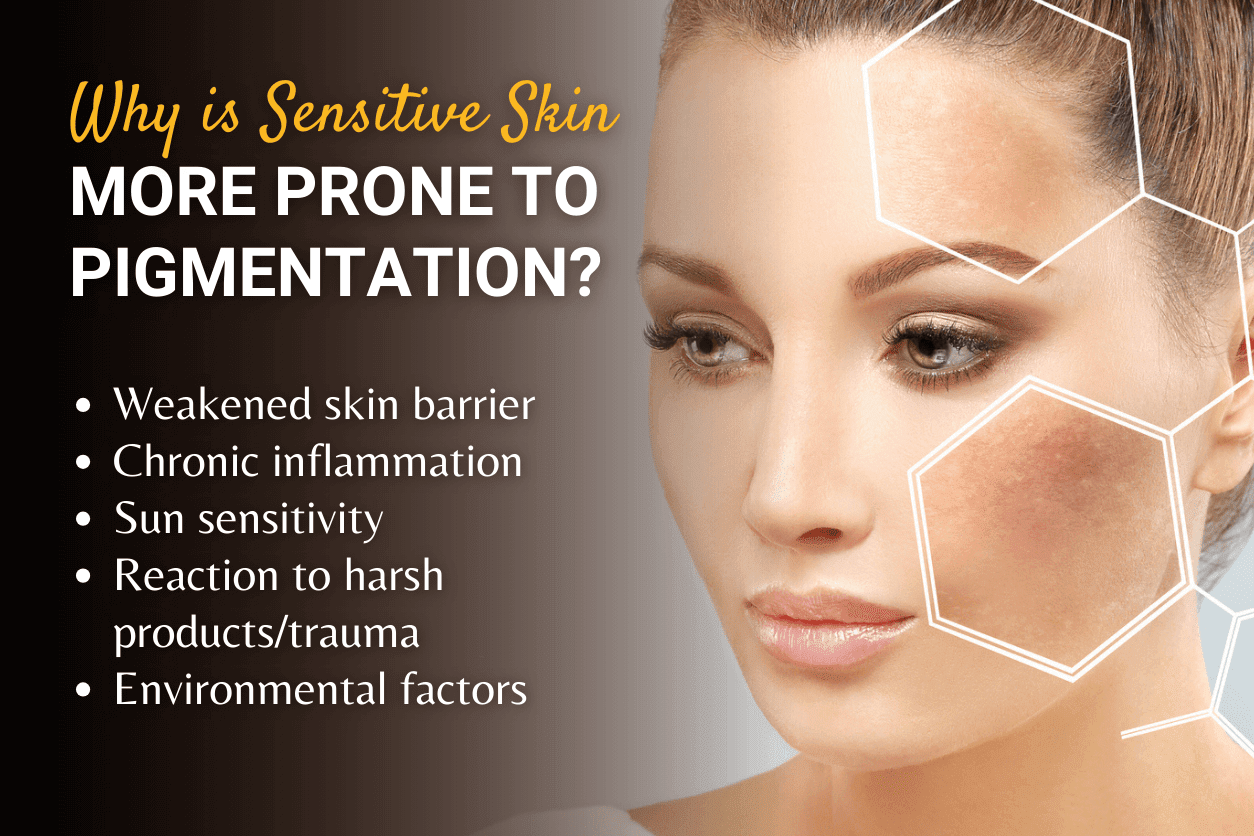
Factors that can make sensitive skin more prone to pigmentation:
- Weakened skin barrier
- Chronic inflammation
- Sun sensitivity
- Reaction to harsh products/trauma
- Environmental factors (response to environmental changes)
What are the common types of pigmentation in sensitive skin?
Sensitive skin is prone to different types of pigmentation, mainly due to a weakened skin barrier and chronic inflammation. Its heightened reactivity/sensitivity creates a cycle in which inflammation stimulates melanocytes to produce excess melanin.
- Post-inflammatory hyperpigmentation (PIH) – darkened spots develop after inflammation, such as acne, eczema, or reactions to skincare.
- Rebound hyperpigmentation – harsh or overly aggressive treatments, as well as abruptly stopping actives, can trigger inflammation, which may lead to pigmentation.
- Redness-related pigmentation – brown or purplish patches are likely to appear due to prolonged inflammation, especially in darker skin tones.
- Sensitivity-related melasma – sun exposure, especially when the skin barrier is already compromised, can worsen hormonal pigmentation like melasma.
What are safe pigmentation treatments for sensitive skin?
Pigmentation treatment for sensitive skin requires a gentle and thoughtful approach. The focus should be on:
- gentle yet effective formulas and treatments
- using lower concentrations of active ingredients
- introducing new products slowly to prevent further inflammation
- having treatments performed by professionals who understand the specific challenges of delicate skin types
Safe options include:
- Medical-grade chemical peels – This offers controlled exfoliation with minimal irritation. At Cutis, we have the VI Peel Precision Plus, which is safe for sensitive skin and all skin tones. It can target melasma, hyperpigmentation, and sun damage.
- Pico laser – Its use of ultra-short pulse durations that minimize heat damage makes it safe for sensitive skin. It can also be customized, with the provider lowering the laser’s energy level for sensitive skin. Pico laser in Singapore can help treat pigmentation, melasma, acne scars, and fine lines.
- Topical pigment regulation – Certain pigment-correcting products can be safe for sensitive skin, but it largely depends on their formulation and ingredients. These can include lightening creams, antioxidants, and barrier-supporting skin care. It is best to consult a professional before introducing such products.
- Combination approach – Gradual treatments, instead of aggressive high-concentration products, combined with good skincare support long-term results. A skin or aesthetic doctor can customize a regimen and recommend a pigment correction treatment while supporting the skin barrier.
How to prevent pigmentation recurrence on sensitive skin
Apart from a gentle approach, sensitive skin needs patience and consistency to prevent pigmentation recurrence. Here’s what can help:
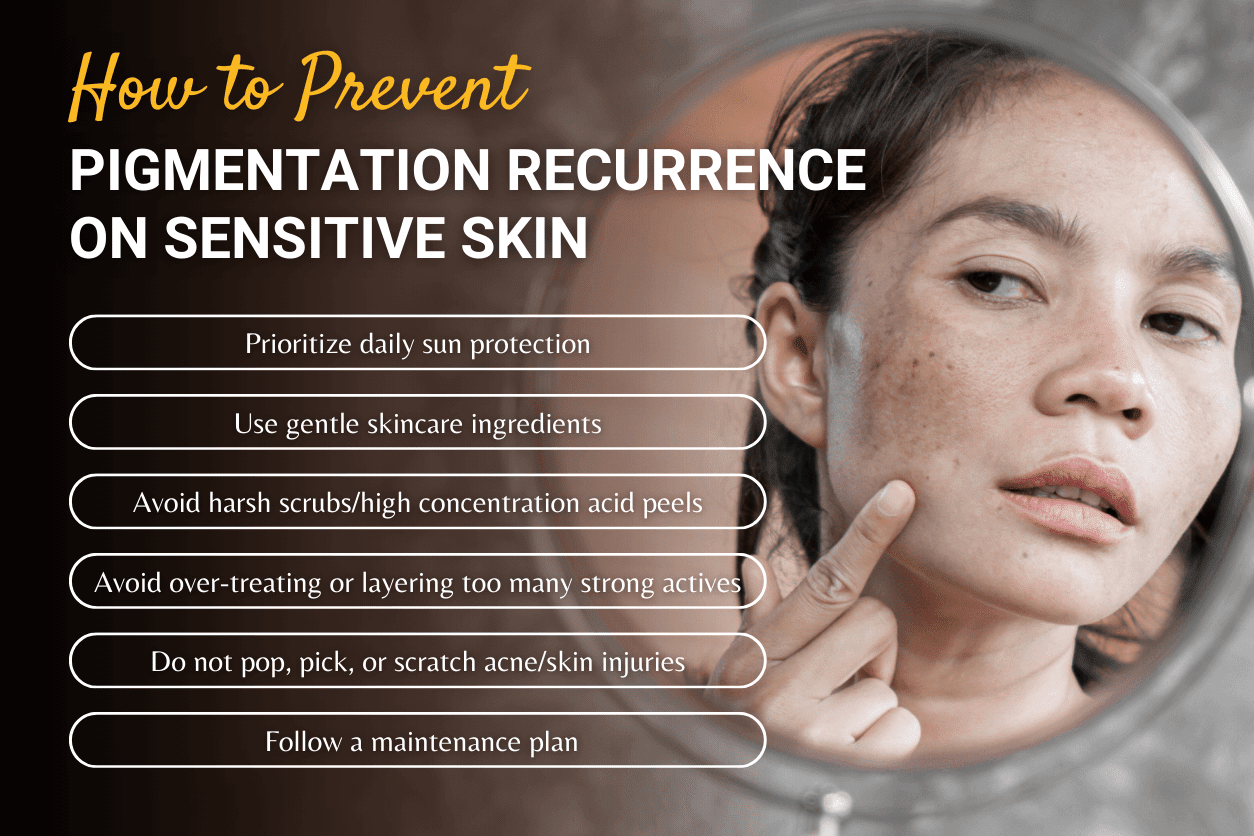
- Prioritize daily sun protection – Apply a broad-spectrum sunscreen with SPF 30 or higher every day. Do so even when indoors or on cloudy days, and reapply when necessary.
- Use gentle skincare ingredients – Choose barrier-supporting products that brighten gradually without causing further irritation. These may include niacinamide, azelaic acid, arbutin, kojic acid, and licorice root extract. Introduce new products slowly and always do a patch test first.
- Avoid harsh scrubs or high-concentration acid peels – Over-exfoliation can cause irritation and inflammation that can stimulate more pigment production. Always go with gentle, controlled exfoliation or low-concentration products with soothing ingredients.
- Avoid over-treating or layering too many strong actives – Combining multiple ingredients can weaken the skin barrier and trigger sensitivity, which may worsen pigmentation. It is also best to avoid DIY chemical peels if you have sensitive skin.
- Do not pop, pick, or scratch acne/skin injuries – Doing so can cause trauma that can lead to PIH and make existing pigmentation worse. Allow blemishes to heal properly with gentle treatments to reduce the risk of dark marks.
- Follow a maintenance plan – Combine professional treatments with a gentle at-home routine to maintain results. This can include UV protection (tinted sunscreens offer protection against visible light), barrier repair, gentle exfoliation, and treating underlying conditions that can cause inflammation (acne, eczema, skin injuries).
For further reading: Prevention is Better Than Cure: 6 Ways to Prevent Hyperpigmentation
Why early, gentle intervention works best for pigmentation treatment
When it comes to pigmentation treatment on sensitive skin and other skin types, starting early and taking a gentle approach delivers better long-term results. This:
- Reduces the risk of PIH by minimizing additional inflammation.
- Allows the skin to recover faster between sessions by strengthening the skin barrier.
- Maximizes long-term brightening by supporting healthy skin function without triggering irritation.
With the right approach, you can safely and gently treat pigmentation in sensitive skin. WhatsApp us today at +65 9780 2079 for a consultation with one of our aesthetic doctors in Singapore. We can develop a pigmentation care plan tailored to your skin’s needs.
To share, click on the Icon.