Robot programming time is the hidden cost in low-volume laser welding
A cell that welds a part in ninety seconds may take two days to program. Offline programming and simulation change which volumes make sense.
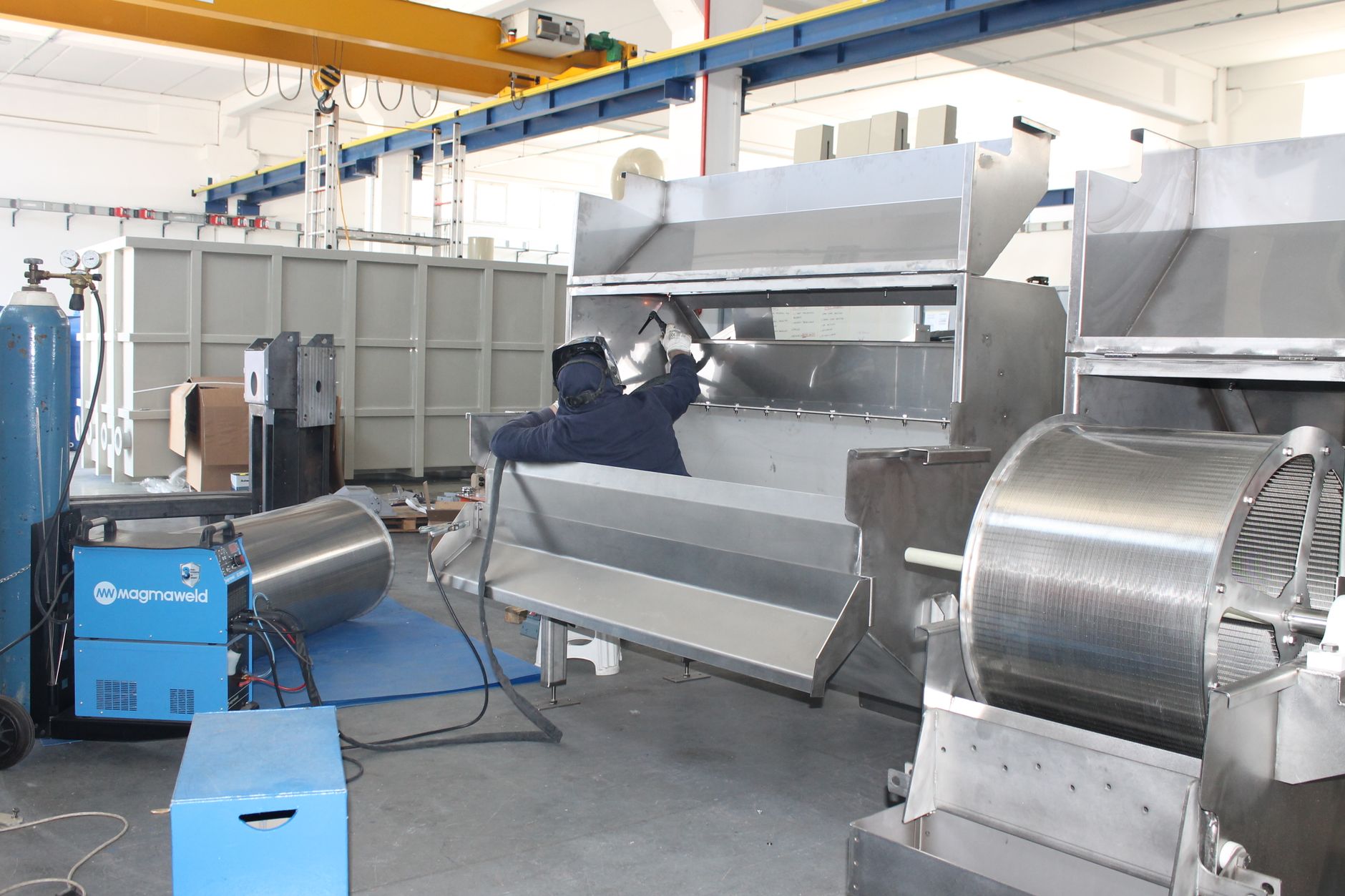
Robotic laser welding is straightforward to justify at high volume: program once, run thousands. At low and medium volume the arithmetic is different, and programming time frequently dominates.
Where the time goes
Teaching a robot path point by point on the shop floor requires the cell, the part and the programmer simultaneously, which means the cell is not producing. For a complex assembly with many welds, several days is not unusual.
Laser welding compounds this relative to arc welding because positional tolerance is tighter. An arc process forgives a path that is half a millimetre off; a focused beam does not, so points need more careful teaching and verification.
Offline programming
Generating the program from CAD, simulating it and downloading it changes the economics substantially. The cell keeps producing while programming happens, and the program arrives largely correct.
The requirement is an accurate model of the cell — robot, fixture, part position, cable routing — and calibration between the model and reality. Without that calibration, an offline program needs enough touch-up on the floor that the benefit shrinks.
Calibration accuracy is therefore the determining factor, and it is where offline programming projects succeed or disappoint.
Simulation catches the expensive errors
Collision detection in simulation prevents the class of error that damages a cutting head or a fixture. For laser cells that matters more than for arc cells, since the process head is expensive and physically vulnerable.
Reach and singularity problems also surface in simulation rather than at the cell, where discovering them means redesigning fixturing after installation.
What it means for volume thresholds
With floor teaching, robotic laser welding needs substantial volume per part number to amortise programming. With effective offline programming, the threshold drops considerably, and cells become viable for varied medium-volume work.
That is why shops evaluating robotic laser welding for mixed production should evaluate the programming toolchain as seriously as the robot and the source. A cell that cannot be programmed efficiently is a cell that runs one part number well and everything else badly.
This article was produced by the LasersNews AI desk and reviewed by our editors.
Related reading

Handheld laser welding grows up as fume, safety and training catch up to the hardware
The tool that upended small-shop fabrication is now facing the unglamorous engineering work that decides whet…

Wobble optics widened the fit-up window, and that is why handheld welding works
Oscillating the beam across the joint trades a little power density for a much larger tolerance to gaps — the…

Battery tab welding still comes down to the copper problem
Copper reflects most of the light a 1 µm source produces until it melts, then absorbs it suddenly. Green and…