Inconsistent cutting often traces back to the steel, not the machine
Surface condition, mill scale and composition vary between suppliers and heats. A parameter set validated on one delivery is not automatically valid on the next.
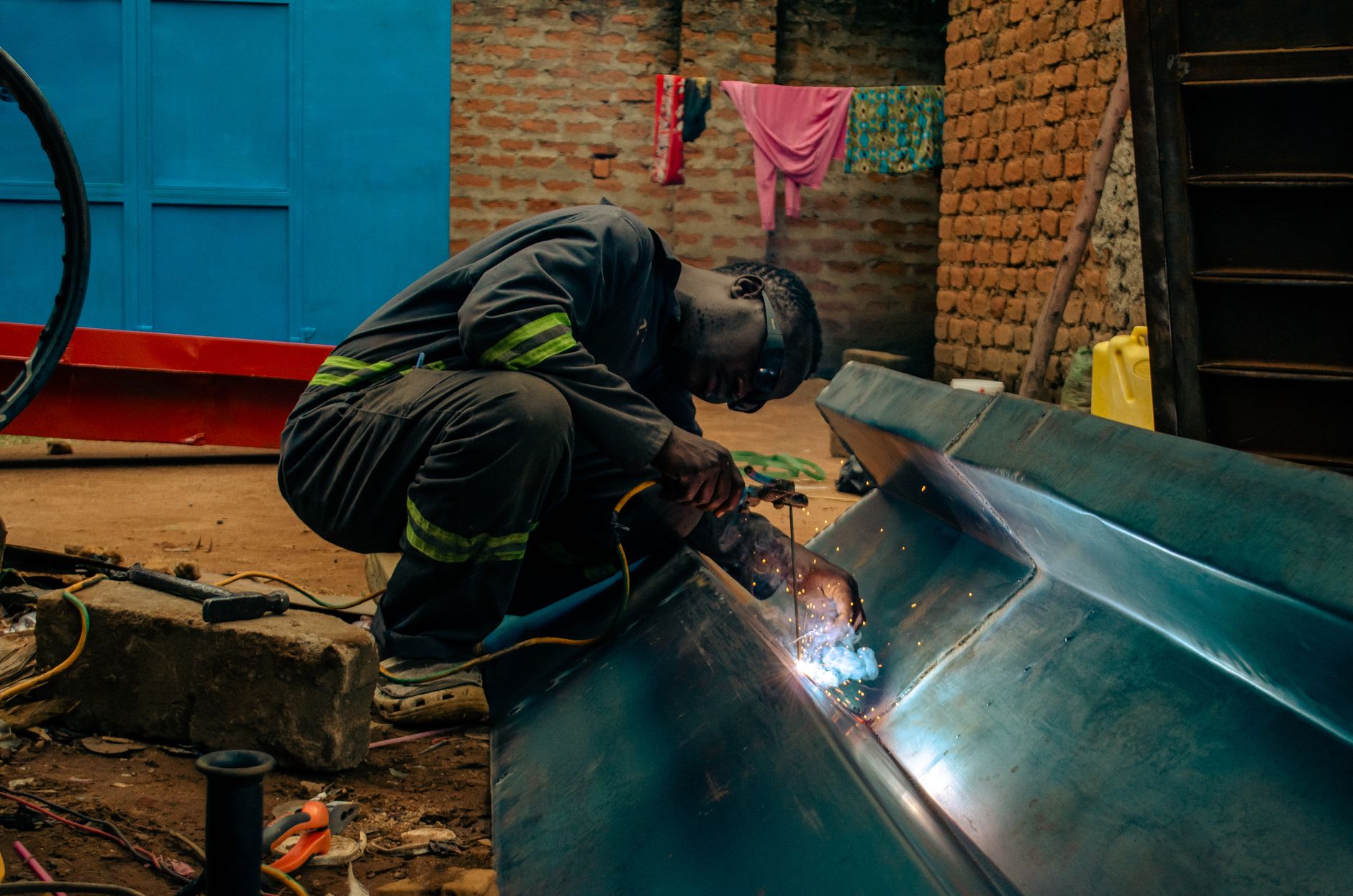
A shop cutting the same part on the same machine with the same program sometimes gets different results week to week. The investigation usually starts at the machine. Often the answer is on the material certificate.
What varies within specification
Surface condition. Hot-rolled steel carries mill scale whose thickness and adhesion vary. Scale absorbs and reflects differently from clean steel, and it changes how the cut initiates.
Composition within grade. A grade specification is a range, not a point. Carbon, manganese, silicon and residual elements vary between heats, and they affect melting behaviour and oxide formation.
Coating. Galvanised coating weight varies, and zinc vaporises well below steel's melting point, producing process disturbance proportional to how much there is.
Flatness and internal stress. Material that moves as it is cut changes the standoff distance, which changes focus position at the workpiece.
Oil and protective film. Rust preventive coatings and protective plastic films behave differently between suppliers and burn or delaminate differently.
How it presents
Symptoms are usually intermittent and material specific: dross appearing on one batch and not another, pierce failures clustering, edge quality varying across a sheet. Because the machine and program are unchanged, the machine gets blamed.
What helps
Recording material source against jobs. Once a shop can correlate quality issues with supplier and heat number, the pattern often becomes obvious quickly.
Parameter sets per supplier where material comes from more than one source, at least for demanding work.
Incoming checks on surface condition for material that will be cut to tight edge requirements.
Talking to the supplier. Mill scale and surface condition are often negotiable, and a supplier who knows the material is laser cut can supply accordingly.
The broader point
Laser cutting is more sensitive to material variation than the processes it replaced, because the process window is narrower and the energy is concentrated. Shops that moved from plasma or sawing sometimes carried over a purchasing approach that treated steel as a commodity within grade.
For most work that remains fine. For work at the edge of what the machine does well, material becomes a process variable, and treating it as one is cheaper than treating the machine as the problem.
This article was produced by the LasersNews AI desk and reviewed by our editors.
Related reading
Bevel cutting heads move from specialist tool to mainstream fabrication kit
Five-axis cutting heads that were once reserved for heavy structural work are appearing on general-purpose fl…

Fiber cutting moves past raw wattage as fabricators chase cost per part
Sheet metal shops are discovering that beyond about 12 kW, cutting economics are decided by gas, optics and u…

Tube laser cutting is quietly rewriting how structural assemblies get designed
When joints can be cut with interlocking geometry instead of fitted by hand, the fixture disappears — and des…