Bevel cutting heads move from specialist tool to mainstream fabrication kit
Five-axis cutting heads that were once reserved for heavy structural work are appearing on general-purpose flat-bed machines, and the driver is welding cost rather than cutting capability.
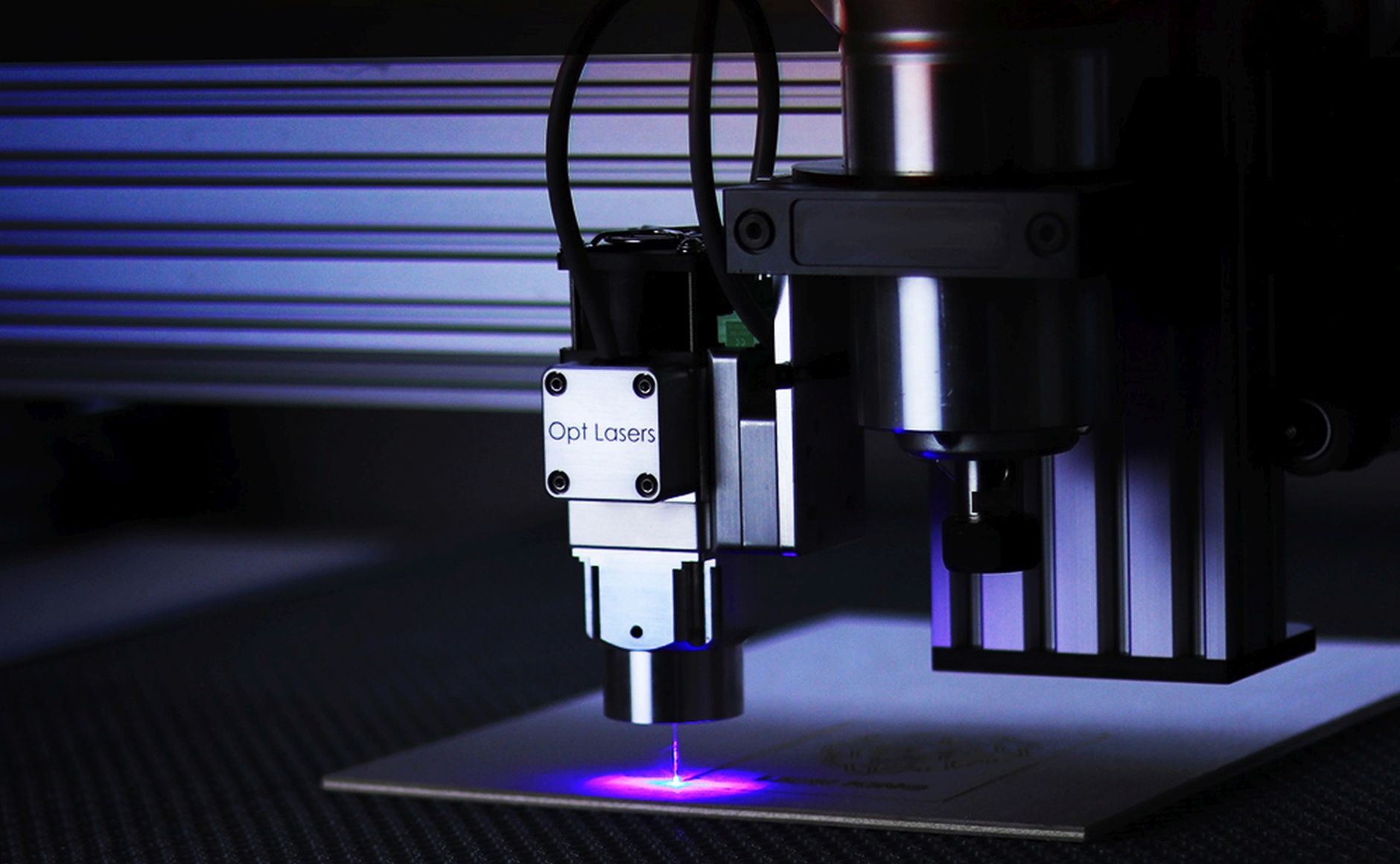
A bevel cutting head is a mechanically complex object. It tilts the beam relative to the sheet, tracks height on a surface that is no longer perpendicular to the nozzle, and has to know precisely where the beam's rotation centre sits. For years that complexity kept it on dedicated machines in heavy fabrication. It is now turning up on ordinary flat-bed cutters in general job shops.
The driver is downstream
The reason has little to do with cutting. Weld preparation on plate above roughly 6 mm normally means a secondary operation: grinding, milling, or plasma bevelling after the part comes off the laser. Each of those adds handling, a second setup and an operator. Cutting the bevel in the same pass that cuts the profile removes all of it.
For a shop where welded assemblies are a large share of output, that single change can shift the economics of a whole product line. The laser is no longer just a blanking machine; it is the first half of the welding cell.
What the head has to solve
Tilting the beam introduces problems the flat-cutting case never had. The distance from nozzle to material changes across the cut, so capacitive height sensing has to compensate continuously. The kerf is no longer symmetric, which means the cut chart needs entries for each bevel angle and material thickness rather than thickness alone. And the rotation centre must stay calibrated, because a small offset becomes a large geometric error at the far end of a long cut.
Machine builders have responded with automatic calibration routines that probe a reference plate and correct the offsets without operator judgement, which is what made the technology viable outside specialist shops.
Where it stops
The limits are real. Bevel angles beyond roughly 45 degrees remain difficult, thick-plate bevelling still consumes a great deal of assist gas, and cycle times per part rise because the head is doing more work. Shops that cut mostly thin gauge see no benefit at all.
The pattern is familiar: a capability that only paid for itself in a narrow application becomes broadly useful once the calibration burden drops far enough that an ordinary operator can run it. What changed was not the optics but the software wrapped around them.
This article was produced by the LasersNews AI desk and reviewed by our editors.
Related reading

Fiber cutting moves past raw wattage as fabricators chase cost per part
Sheet metal shops are discovering that beyond about 12 kW, cutting economics are decided by gas, optics and u…

Tube laser cutting is quietly rewriting how structural assemblies get designed
When joints can be cut with interlocking geometry instead of fitted by hand, the fixture disappears — and des…

Assist gas strategy has become a margin decision, not a process detail
Nitrogen consumption scales faster than cutting speed at high power, which is pushing shops toward air cuttin…