
3 Key Takeaways
- Higher melanin levels provide natural UV protection, helping delay visible signs of aging like wrinkles and sunspots.
- Skin tone influences pigmentation issues such as melasma, PIH, and dark spots, with treatment strategies varying by skin type.
- Sun protection and professional guidance are essential for all skin tones, with tailored aesthetic treatments like chemical peels and Pico Laser for pigmentation management.
Ever wondered why some people seem to age more slowly? While skin care and habits certainly matter, your skin tone plays a big role too. Higher melanin levels, common in darker skin tones, provide better protection against UV damage. This can delay visible signs of aging, with research suggesting that they may appear up to 10 years later.
Skin tone also affects vulnerability to dark spots, sun damage, and other visible signs of aging, as well as response to hyperpigmentation treatment. Certain skin tones are more prone to specific issues, and some procedures may initially cause pigmentation to appear darker before it improves.
Continue reading as our aesthetic clinic explores how skin tone affects aging, why darker skin seems to age more slowly, and what it means for effective skin protection and pigmentation management in Singapore.
Melanin acts as a natural sun shield
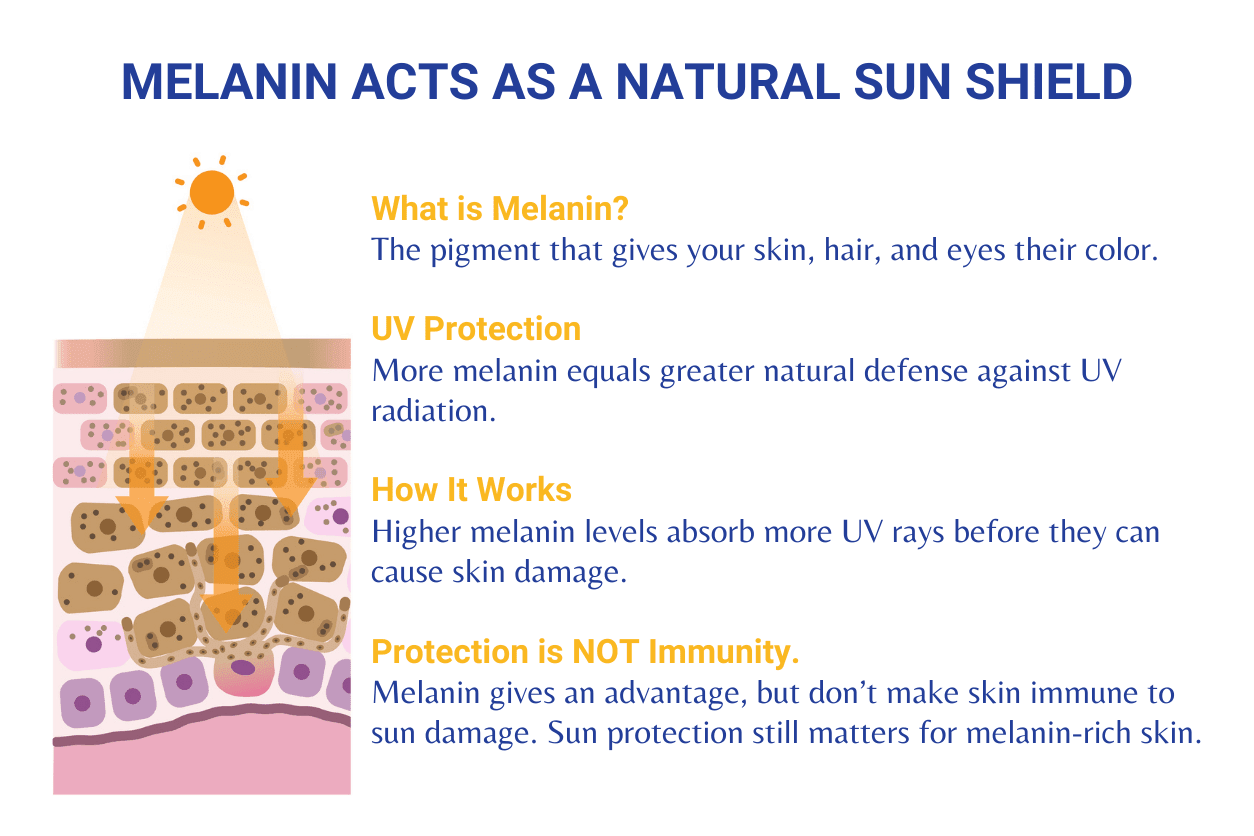
- What is melanin?
Melanin is the pigment that gives your skin, hair, and eyes their color. Those with more melanin generally have darker skin, eyes, and hair compared to people with less melanin. - UV protection:
More melanin equals better defense against UV radiation. It absorbs harmful UV (ultraviolet) rays and protects your skin cells from sun damage. - How it works:
Higher melanin levels absorb more UV rays before they can cause skin damage. It acts like a sunscreen, absorbing and scattering UV radiation before it penetrates deeper layers and damages cell DNA. - Protection is NOT immunity.
While melanin provides a natural defense, it does not make your skin immune to sun damage. It cannot block all UV rays, and prolonged/unprotected exposure causes DNA damage on all skin types. Sun protection matters to protect the skin and prevent the worsening of skin issues, especially those with deeper skin tones.
Melanin, UV radiation, and sun protection
As previously mentioned, darker skin naturally contains more melanin, which acts as a built-in sun protection factor (SPF). Melanin absorbs ultraviolet (UV) radiation, reducing the amount of damage the skin experiences from exposure.
Since UV damage is one of the major causes of skin aging, having higher melanin provides significant protection against wrinkles, sunspots, and other signs of photoaging.
- Dark skin has an average natural SPF of about 13 to 13.4, whereas light skin has an SPF of around 3 to 3.4.
- The higher the melanin content, the more UV radiation can be absorbed before it causes substantial damage to the skin.
- Although melanoma is more common in men than women across all races, Black men and women are both less likely to develop it than white, light-skinned individuals.
Skin diseases are harder to spot in darker skin
One major challenge for people with darker skin is that changes in the skin, such as discoloration, rashes, or early signs of disease, can be more difficult to detect. Subtle changes in tone or texture may go unnoticed, which can delay diagnosis.
- Skin cancers and other serious conditions are often detected at more advanced stages in people with darker skin.
- Late diagnosis can also delay treatment, reducing the chances of successful outcomes.
- Certain conditions, like eczema, psoriasis, or infections, may also present differently on darker skin, making early diagnosis more challenging.
Because of these factors, regular skin checks and awareness of unusual changes are particularly important for people with darker skin. Health education and professional monitoring can help overcome these challenges and improve outcomes.
Skin tones and aging
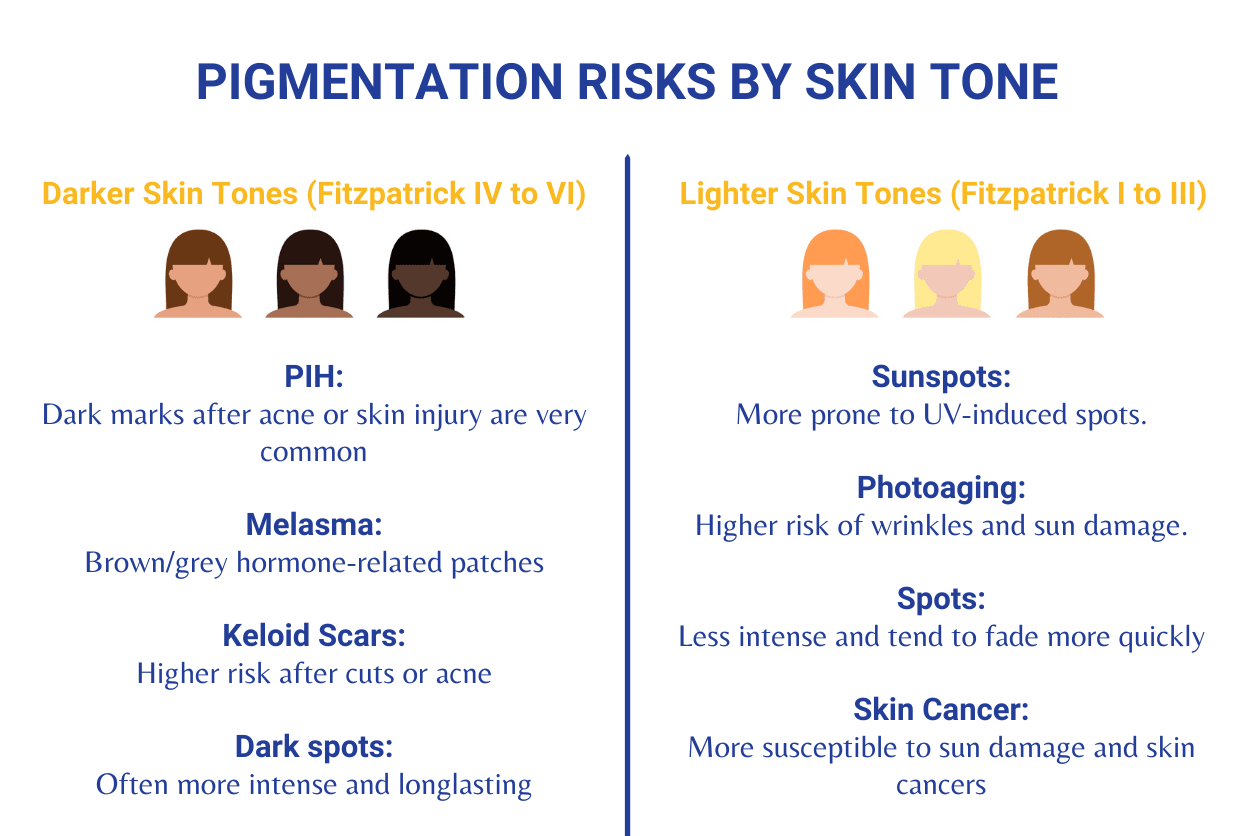
Darker skin tones (Fitzpatrick IV–VI)
Darker skin has a thicker dermis and more melanin and tends to age more slowly. This extra melanin protects skin, so deep wrinkles are less common. Age spots caused by sun exposure are also less noticeable.
Despite this protection, darker skin can have unique pigmentation issues. These include:
- Post-inflammatory hyperpigmentation (PIH) – appears as dark marks after acne or skin injury.
- Melasma – brown or grayish hormone-related patches that are common during pregnancy.
People with darker skin also:
- Have a higher risk of keloid scars after cuts or acne.
- have dark spots that often appear more intense and stubborn to treat
- develop other conditions, like dermatosis papulosa nigra (dark or brown facial spots)
- have an increased risk of hypopigmentation, light patches of skin stand out against the overall skin tone.
Lighter skin tones (Fitzpatrick I–III)
Lighter skin has a thinner dermis and less melanin, which makes it more prone to fine lines, wrinkles, and photoaging. Sun-induced age spots, also called sunspots, are more common and visible in lighter skin tones.
Pigmentation issues do occur, but tend to be less intense and fade faster than in darker skin. These include:
- Sunspots – UV-induced dark spots that are more noticeable.
- Early photoaging – fine lines and wrinkles caused by sun damage.
- Skin clarity treatment and pigment regulation treatment may help improve uneven pigmentation.
People with lighter skin also:
- have higher susceptibility to sun damage and skin cancers
- tend to develop spots that fade more quickly than in darker skin
- may notice wrinkles earlier due to less natural protection from UV radiation
Skin types with Asian and Latin American origin are also more prone to pigmentation, but they are not as visible as in other skin types. Wrinkles may also appear earlier than in darker skin, but changes in pigmentation tend to be more subtle.
Cultural ideals of beauty and skin tone
In many parts of the world, uneven skin tone is generally seen as undesirable. Studies show that blemishes and uneven coloration can strongly influence perceptions of attractiveness. Cultural attitudes toward skin and aging, however, differ widely:
- Asian women often focus more on pigmentation issues and even skin tone.
- In Southeast Asia, lighter skin is generally preferred over tanned skin.
- In Northern Europe, wrinkles are the main concern, as they are strongly associated with aging.
- In the United States, many people, regardless of ethnicity, consider tanned skin to be attractive, whether the individual is fair or dark-skinned.
Even within Africa, cultural perceptions vary. In some tribes, lighter skin is seen as a sign of beauty and good fortune. For example:
- A lighter-skinned woman may symbolize happiness in marriage.
- According to traditional sayings, darker-skinned women can be perceived as less fortunate.
Overall, ideals of beauty are shaped by both universal concerns, like skin evenness, and specific cultural values, which determine which traits are most admired.
Smart skin care for all skin types
- Sun protection: Every skin tone needs UV protection. While darker skin naturally has some protection, sunscreen is still essential. Always apply broad-spectrum sunscreen with SPF 30 or higher, even on cloudy days.
- Be aware of pigmentation risks: Skin conditions or injuries can trigger post-inflammatory pigmentation. Consult a skin or aesthetic doctor if you notice changes or if dark spots don’t improve with regular treatment.
- Exercise treatment caution: Darker skin types have a higher risk of pigmentation after procedures like lasers or chemical peels. Always seek professional guidance before treatment.
- Consider aesthetic treatments: At Cutis, we have several options for pigmentation treatment in Singapore, uneven skin tone treatment, and pigment regulation treatment. A consultation with our aesthetic doctor will let you know which one suits you best.
- Medical-grade chemical peels – provide exfoliation with minimal irritation. VI Peel Precision Plus Peptides is specifically formulated to treat melasma, sun damage, and post-inflammatory hyperpigmentation.
- Pico laser – uses ultra-short pulses to break down pigment and target pigmentation, melasma, acne scars, and fine lines. It is designed to minimize heat damage, making it safe for a variety of skin tones and types.
- Topical pigment regulation – formulations with brightening agents, antioxidants, and barrier-supporting ingredients may help, depending on skin sensitivity. Professional guidance is recommended before starting.
- Combination approach – Treatments paired with skincare often deliver better long-term results. A skin or aesthetic doctor can tailor a plan that corrects pigmentation while protecting the skin barrier.
Schedule a consultation today
Bothered by stubborn pigmentation or other visible signs of aging? Contact Cutis Medical Laser Clinics today and schedule a consultation with one of our aesthetic doctors in Singapore for proper diagnosis and a tailored treatment plan.
To share, click on the Icon.