
3 Key Takeaways
- Eating for your skin has real science behind it – vitamin C, beta-carotene, and omega-3s support collagen, hydration, and skin repair.
- Food isn’t a substitute for topical skincare – Eating beta-carotene isn’t the same as applying retinol, and one cannot replace the other.
- The right approach combines both – good nutrition builds the foundation; topical actives and treatments do the targeted work.
While there’s nothing new with using diet to improve skin appearance, social media influencers are currently promoting the trend of “eating your skincare”. They recommend swapping topical skincare for raw carrot salad (dubbed as retinol replacement), broccoli smoothies for vitamin C, and more sardines for glowing skin.
These foods are indeed packed with nutrients, but can they really replace your skincare routine and even professional treatments? Continue reading as our aesthetic clinic in Singapore breaks down the trend, the science behind it, and where food ends and proper skincare begins.
What is the “Eating Your Skincare” Trend?
“Eating your skincare” is a viral beauty trend focused on achieving glowing skin through food instead of (or together with) topical skincare. It proposes eating vitamin-rich or nutrient-dense foods to support skin health and a glowing complexion from the inside out.
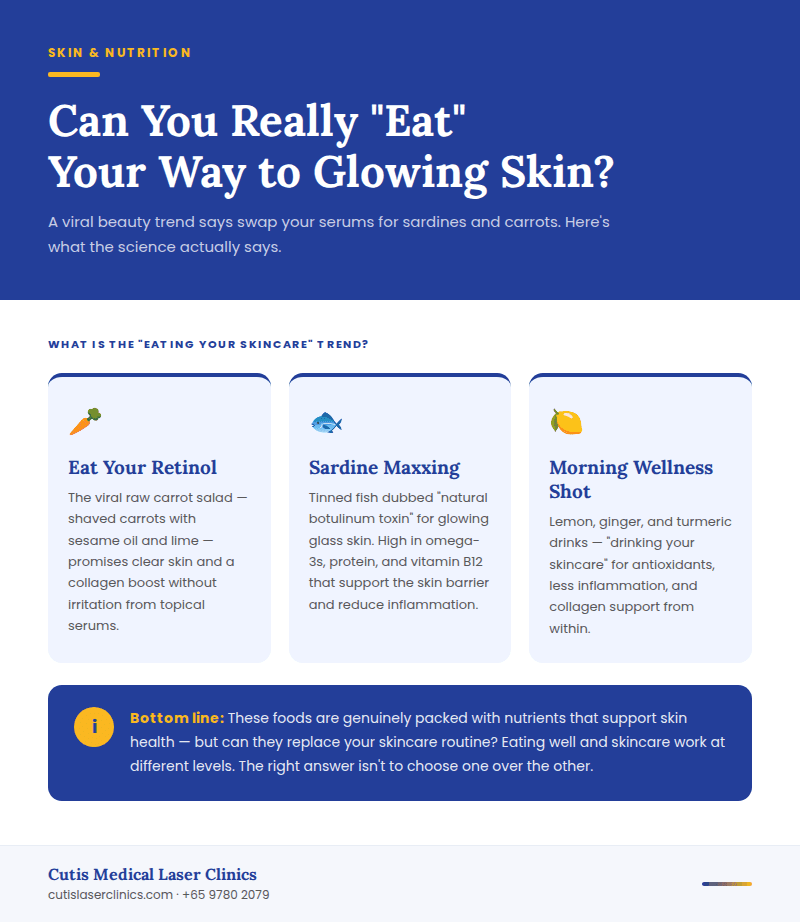
The trend has its roots in the gut-skin connection, but it took off with a few viral concepts:
- Eat your retinol – consuming beta-carotene foods, specifically carrots, to get the benefits of retinol. The viral carrot or retinol salad uses raw, shaved carrots mixed with lime, garlic, sesame seeds/oil, and spring onions. This recipe has gone viral, promising clear skin and collagen boost without the irritation caused by topical serums.
- Sardine maxxing – involves eating tinned fish or sardines to achieve glowing, glass skin. Some are even dubbing sardines as natural botulinum toxin or a multivitamin for the skin. These small, fatty fish contain protein, vitamin B12, and specifically omega-3s, which are said to support the skin barrier and reduce inflammation.
- Morning wellness shot – using specific ingredients, including lemon, ginger, turmeric, and others, to start your day. This is also referred to as “drinking your skincare” with nutrient-dense ingredients that help support the skin by providing antioxidants, reducing inflammation, and boosting collagen.
What Does Science Say?
Experts have long acknowledged the diet-skin connection. In addition, some claims of this trend are also supported by research, but it is also more nuanced than that.
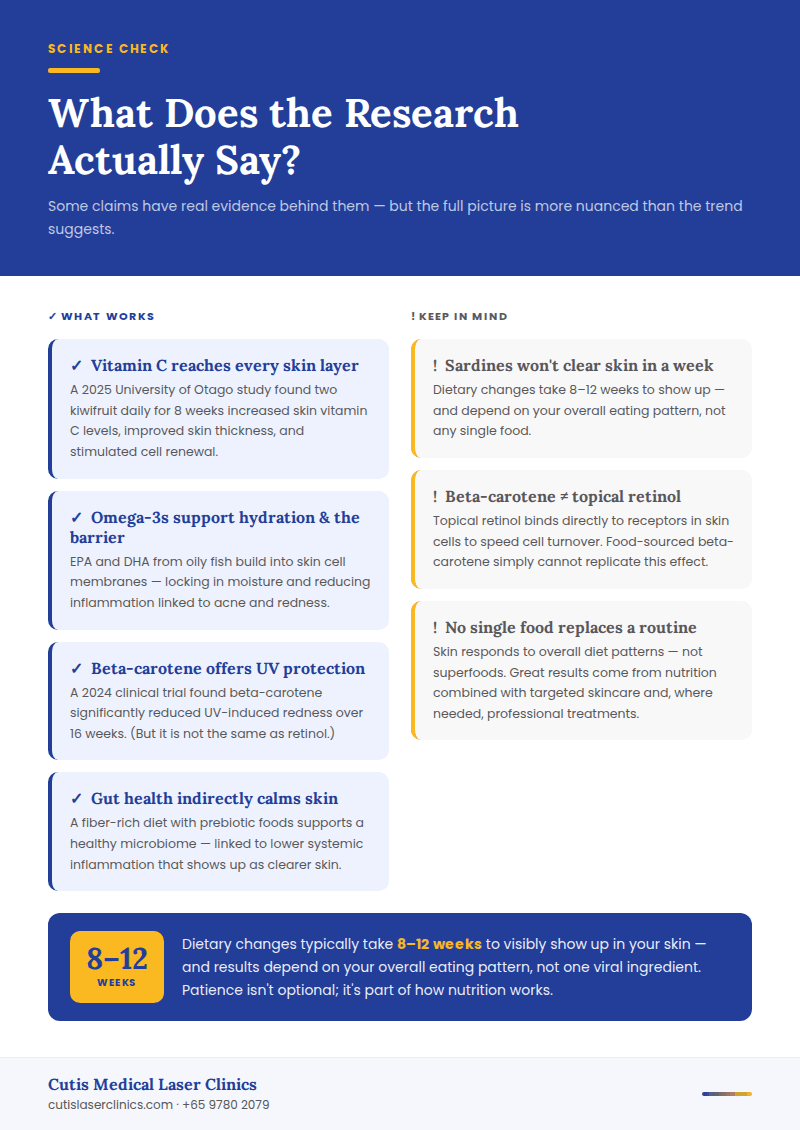
What works:
- Vitamin C from food reaches every skin layer. Research says vitamin C from the bloodstream is delivered to all skin layers. Great sources include citrus, bell peppers, kiwifruit, strawberries, and leafy greens.
In addition, a 2025 University of Otago study found that eating two kiwifruits daily for 8 weeks increased vitamin levels in the skin. It also improved skin thickness and stimulated cell renewal.
- Omega-3s support hydration and the skin barrier. EPA and DHA from oily fish (sardines, salmon, mackerel) build directly into skin cell membranes. These help lock in moisture and reduce inflammation linked to acne, redness, and eczema.
A tin of sardines typically has more omega-3s than many supplement capsules. Just be sure to watch for high sodium and histamine sensitivity. Additionally, eating sardines for almost every meal is not recommended.
- Beta-carotene protects against UV damage (but it’s not retinol). Found in carrots, sweet potatoes, and leafy greens, beta-carotene is a vitamin A precursor your body converts only as needed. This means it won’t act or behave like a topical retinoid.
What beta-carotene does is accumulate in the skin and offer photoprotection. A 2024 clinical trial found it significantly reduced UV-induced redness over 16 weeks. Despite this, it is not a substitute for sunscreens. - Gut health has a real effect on skin. A fiber-rich diet with prebiotic foods (garlic, onions, legumes, whole grains) supports a healthy gut microbiome. This is linked to lower systemic inflammation, and that shows up as calmer, clearer skin. The effects are slower to see than a serum, but real.
It’s best to keep in mind:
- Sardines won’t clear your skin in a week. Dietary skin changes typically take 8–12 weeks to show up. More importantly, they depend on your overall eating pattern, not a single food. Sardines may support skin health, but they act slowly and don’t produce a dramatic transformation.
- Eating beta-carotene isn’t “the same as applying retinol.” Topical retinol works by binding directly to receptors in skin cells to speed up cell turnover. Foods high in beta-carotene cannot replicate what it can do. Food alone cannot reach these specific receptors.
- No single food replaces a skincare routine (and treatments). Skin responds to overall diet patterns, not superfoods or “miracle” ingredients. Great results come from good nutrition combined with targeted topicals and (where needed) professional aesthetic treatments.
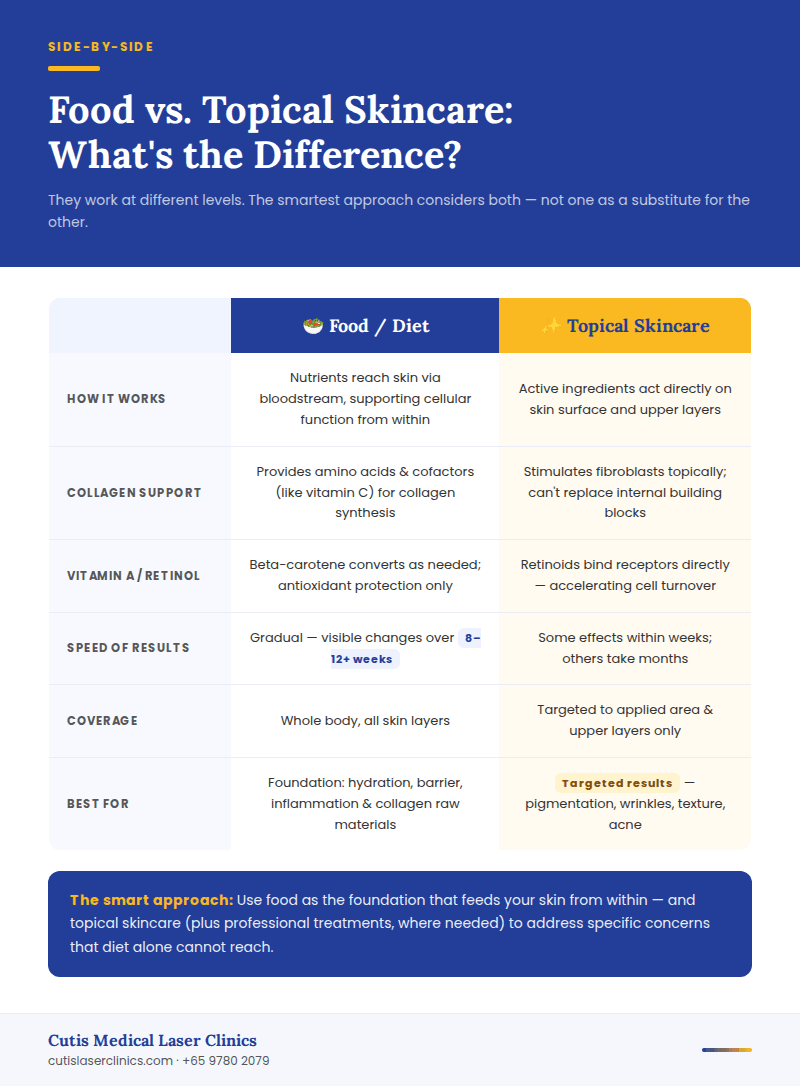
Food vs. Topical Skincare
Trends in food and topical skincare work at different levels. The right approach is not just to focus on one, to consider both and the science behind them.
What Should You Eat for Your Skin?
Focus on filling your diet with vitamins and minerals:
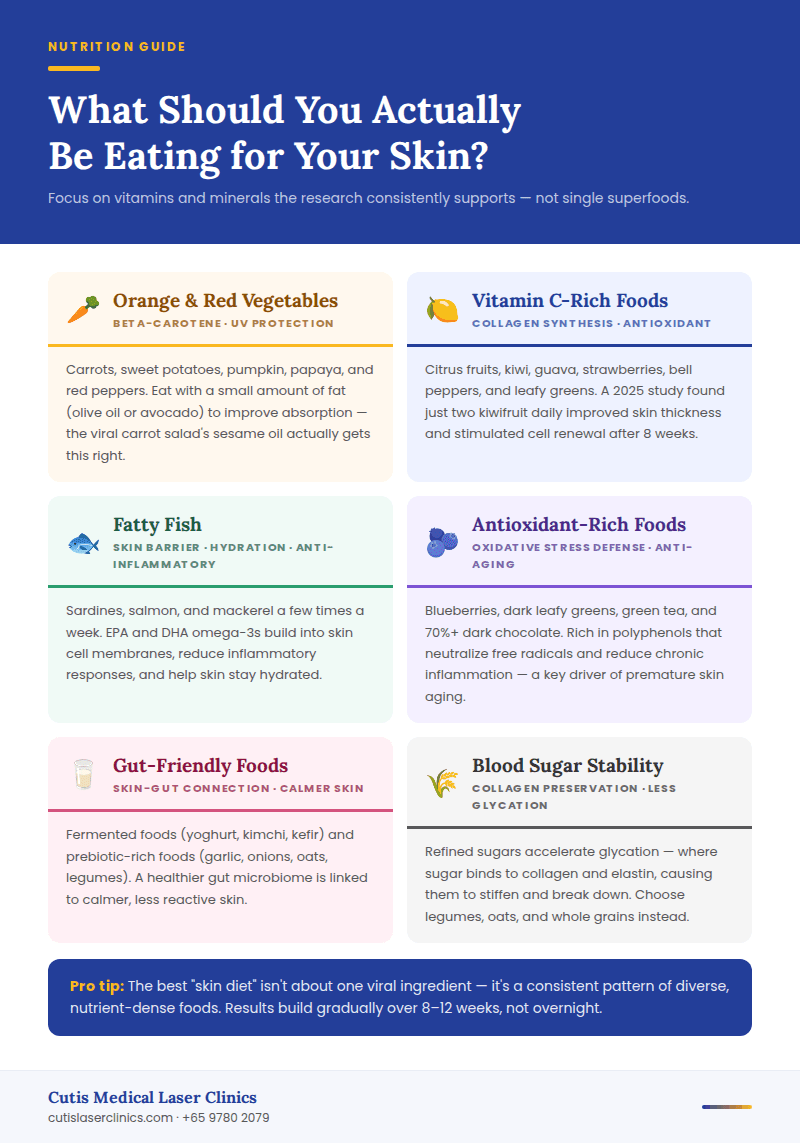
- Vitamin C-rich foods (collagen support) – Eat a variety from different sources. Good sources include citrus fruits, kiwi, guava, strawberries, bell peppers, and leafy greens.
- Orange and red fruits and vegetables (beta-carotene) – Great sources include carrots, sweet potatoes, pumpkin, papaya, and red peppers. Eat them with a small amount of fat (olive oil or avocado) to improve absorption.
- Fatty fish (skin barrier and hydration) – Sardines, salmon, and mackerel provide EPA and DHA omega-3s. It is ideal to pair them with a good olive oil to make the most of fat-soluble nutrients.
- Antioxidant-rich food (oxidative stress defense) – Berries (especially blueberries and strawberries), dark leafy greens, green tea, and dark chocolate (70%+ cacao) are rich in polyphenols and flavonoids. They help neutralize free radicals and reduce chronic low-grade inflammation.
- Gut-friendly foods (skin-gut connection) – These include fermented foods (yogurt, kimchi, kefir) and prebiotic-rich foods (garlic, onions, oats, legumes). A healthier gut microbiome is linked to calmer, less reactive skin.
- Low-GI foods (keeping blood sugar stable) – Refined sugars and high-GI foods increase blood sugar. It can accelerate glycation, a process where sugar binds to collagen and elastin, causing them to stiffen and break down. Low-GI whole foods include legumes, oats, and whole grains.
What Food Can’t Do (And Skincare Can)
Eating well cannot reverse existing collagen loss, fade pigmentation, or tighten sagging skin. Diet alone doesn’t address what’s happening in the deeper layers of the skin over time. This is where skincare and aesthetic treatment can be a great help.
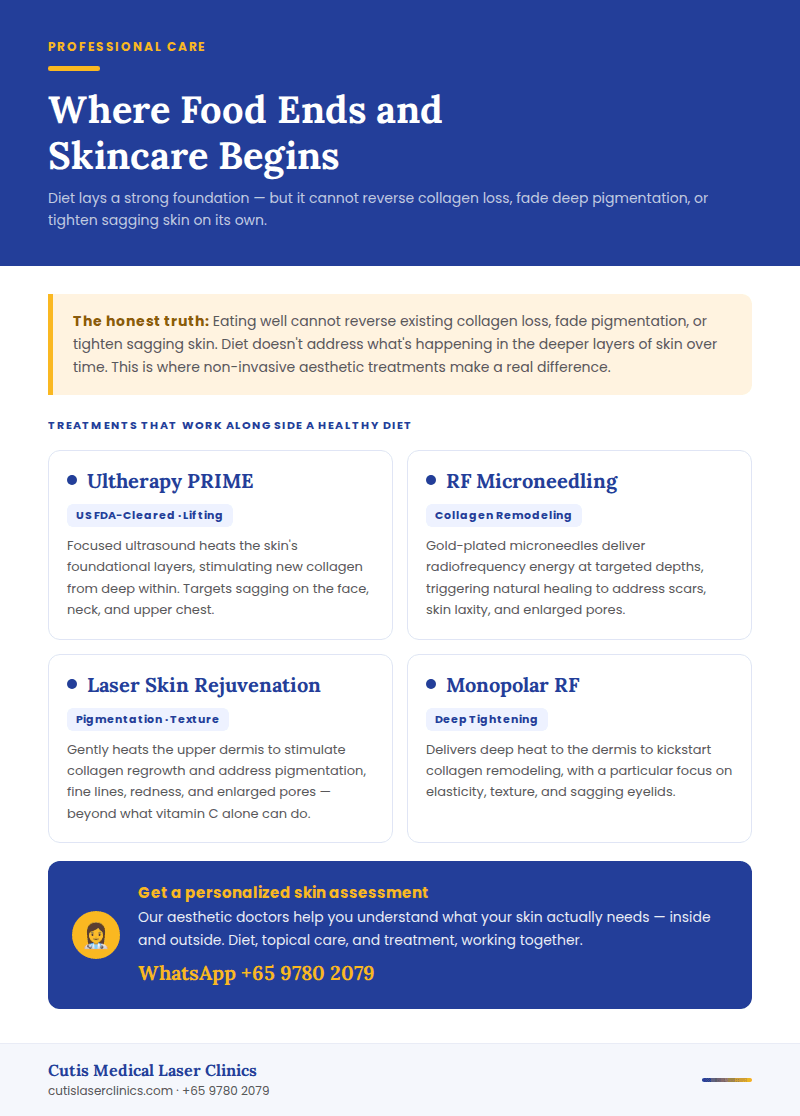
At Cutis Medical Laser Clinics, we offer non-invasive treatments that work well alongside a healthy diet:
- Ultherapy PRIME – a US FDA-cleared skin lifting treatment that uses focused ultrasound. It heats the skin’s foundational layers, stimulating new collagen from deep within. It targets sagging on the face, neck, and upper chest.
- RF Microneedling – uses gold-plated microneedles to deliver radiofrequency energy. It triggers the body’s natural healing response and stimulates collagen production. It can help with scars, skin laxity, and enlarged pores.
- Laser skin rejuvenation – gently heats the upper dermis to stimulate collagen regrowth and address pigmentation, fine lines, redness, and enlarged pores. Eating vitamin C-rich fruits cannot reverse these concerns.
- Monopolar RF – delivers deep heat to the dermis to kickstart collagen remodeling, with a particular focus on elasticity, texture, and sagging eyelids.
- Dr. Sylvia’s VitC Defense Serum – contains ascorbic acid, tocopherols, and ferulic acid. It helps neutralize free radicals, even tone, and support collagen. It’s a good complement to dietary vitamin C.
The Right Approach
The “eating your skincare” trend does support skin health. But it is important to remember that food and skincare work differently, and you cannot treat one as a substitute.
If you’re looking to understand what your skin needs (inside and outside), a consultation with one of our aesthetic doctors can help. We perform a personalized skin assessment, and we’re happy to talk through where diet fits alongside treatment and topical care.
WhatsApp us at +65 9780 2079 to learn more or to schedule your consultation.
To share, click on the Icon.