

3 Key Takeaways
- Apply vitamin C serum to clean, dry skin. Damp skin dilutes the formula and accelerates oxidation, reducing both the stability and effectiveness, particularly for potent L-ascorbic formulations.
- Sunscreen is non-negotiable. In Singapore’s high-UV environment, skipping SPF cancels out the brightening and protective benefits of vitamin C serum. Always layer a broad-spectrum SPF 30+ sunscreen on top.
- Consistency matters more than intensity. Vitamin C works cumulatively. Store it properly, use it daily, and avoid incompatible ingredients; visible results typically appear in 4 to 12 weeks.
All About Vitamin C Serum: How to Use It Right, Maximize Results, and Protect Your Skin in Singapore’s Climate
It is easy to understand why vitamin C is a popular skincare ingredient for protecting and brightening the skin. Often formulated into serums, vitamin C is also one of the most widely researched and scientifically backed skincare actives. It neutralizes free radicals, stimulates collagen synthesis, and reduces hyperpigmentation.
While vitamin C is a favorite antioxidant serum, not everyone knows how to use it properly. Many buy a quality serum, use it inconsistently or incorrectly, and then wonder why it isn’t working, or worse, why it’s causing irritation.
Whether you’re new to vitamin C or an experienced user looking to enhance your results, this guide from our aesthetic clinic in Singapore pulls together everything you need to know, including:
- The science behind how vitamin C works
- How to apply vitamin C correctly (dry vs. damp skin)
- How to pair it with the right ingredients
- Common mistakes when using vitamin C and how to fix them
- What to look for in a vitamin C serum in Singapore
What is Vitamin C serum?
Vitamin C itself is known for supporting the body’s immune system and helping it fight infections. It is a potent antioxidant that can neutralize free radicals, which are known to cause oxidative stress, a process that triggers cell and DNA damage, and contributes to aging.
What vitamin C does is help with the natural regeneration process of the skin to help the body repair damaged cells. It can be consumed through fruits and vegetables or applied topically to help improve dullness and reduce signs of aging. Topical vitamin C is said to help with the production of two essential skin proteins, collagen and elastin.
Vitamin C in skincare is usually available in the form of serums, oils, and moisturizers. Serums are the most popular formulation and are used alongside broad-spectrum sunscreens to improve the skin’s protection against environmental damage, lighten dark spots and hyperpigmentation, as well as reduce aging.
The science behind Vitamin C: How it works
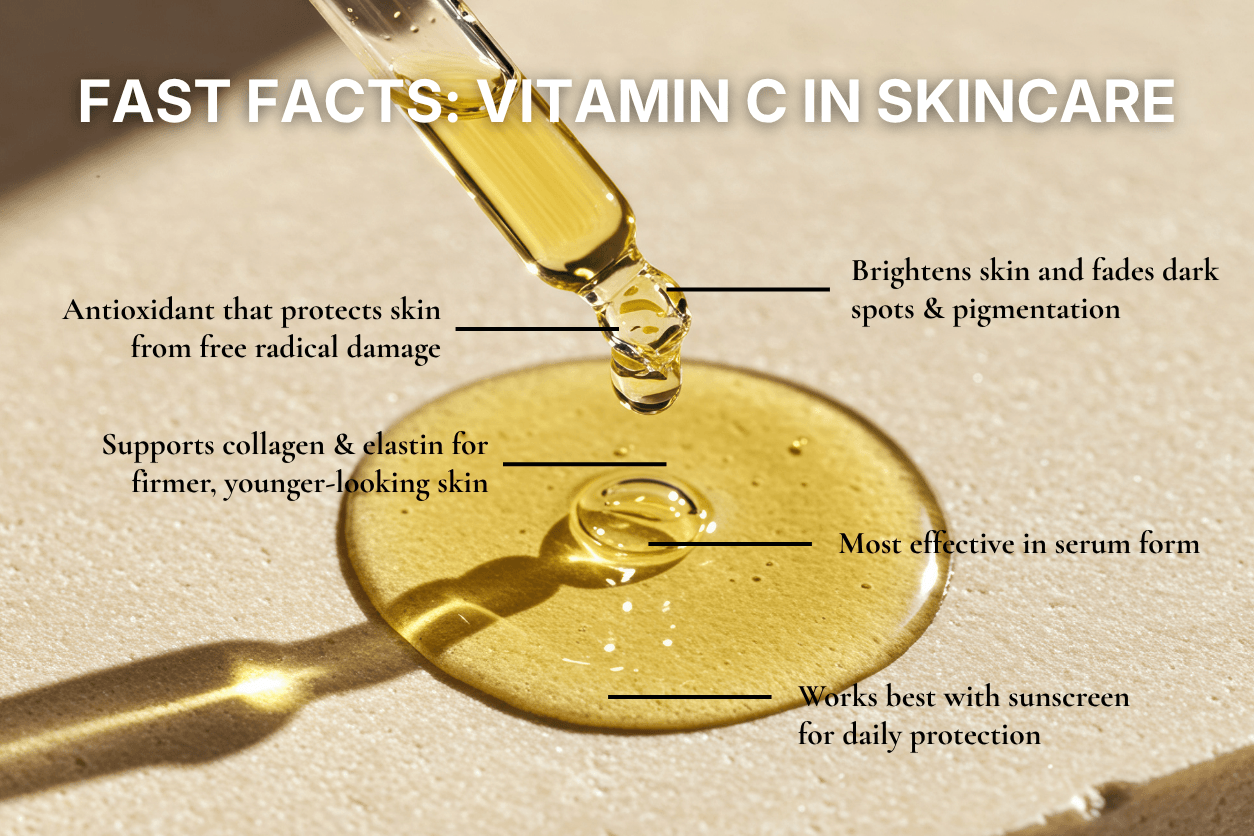
Topical vitamin C (commonly L-ascorbic acid) works through mechanisms that help target aging, pigmentation, and sun damage. This is what makes it a good addition to every Singapore skincare routine.
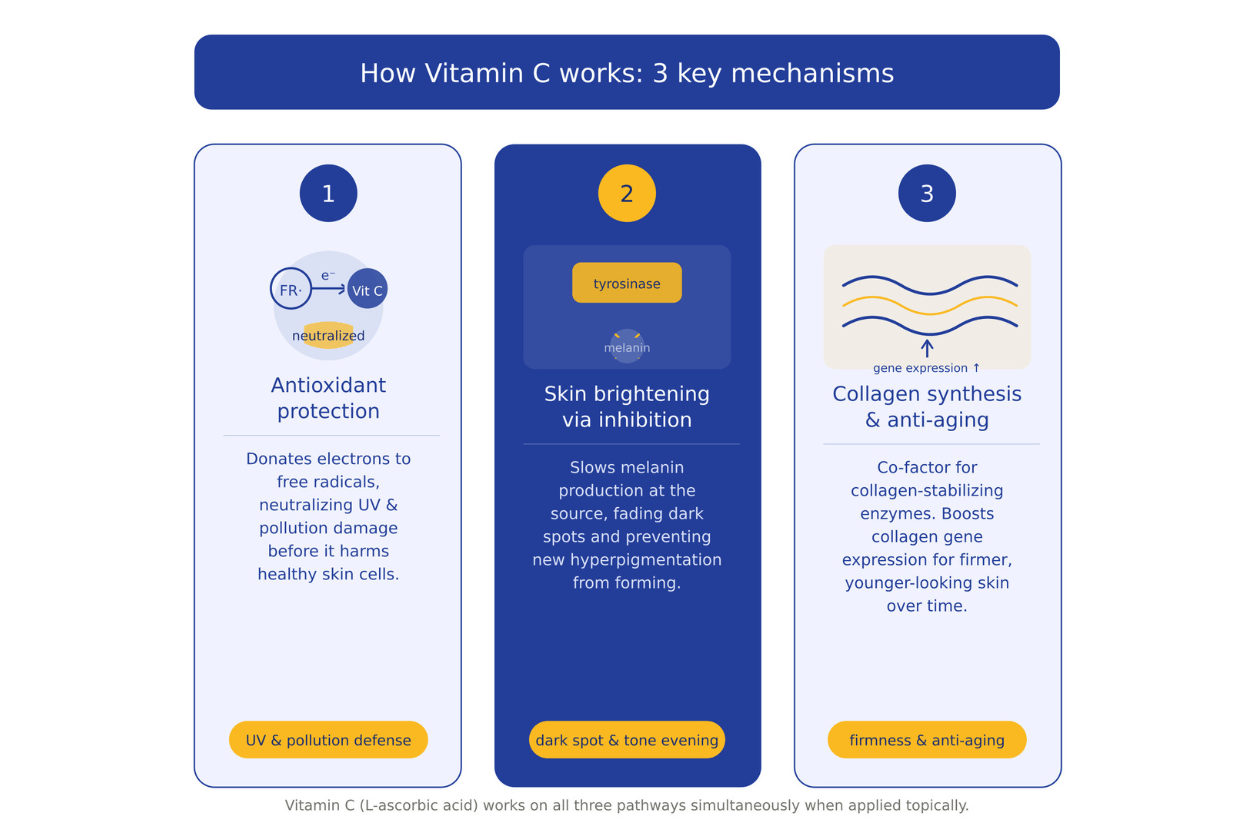
Antioxidant protection
Vitamin C helps defend the skin against oxidative stress caused by UV exposure and pollution. It works by donating electrons to free radicals, neutralizing them before they can damage healthy skin cells. This process helps prevent oxidation, which can lead to premature aging and dull-looking skin.
Brightening (inhibiting tyrosinase)
Vitamin C reduces the activity of tyrosinase, an enzyme that catalyzes the production of melanin and other pigments. It acts as a potent inhibitor that can help decrease melanin production, making it ideal for managing sun spots, post-inflammatory hyperpigmentation (PIH), and melasma, which are common concerns among patients at our aesthetic clinic in Singapore.
Collagen synthesis
Vitamin C acts as a cofactor for enzymes that stabilize new collagen fibers. It also boosts collagen gene expression, stimulating the production of collagen. And as vitamin C provides antioxidant protection, it helps prevent the degradation of existing collagen.
What are the benefits of Vitamin C serum?
A high-quality vitamin C serum delivers a broad range of skin benefits when used correctly and consistently:
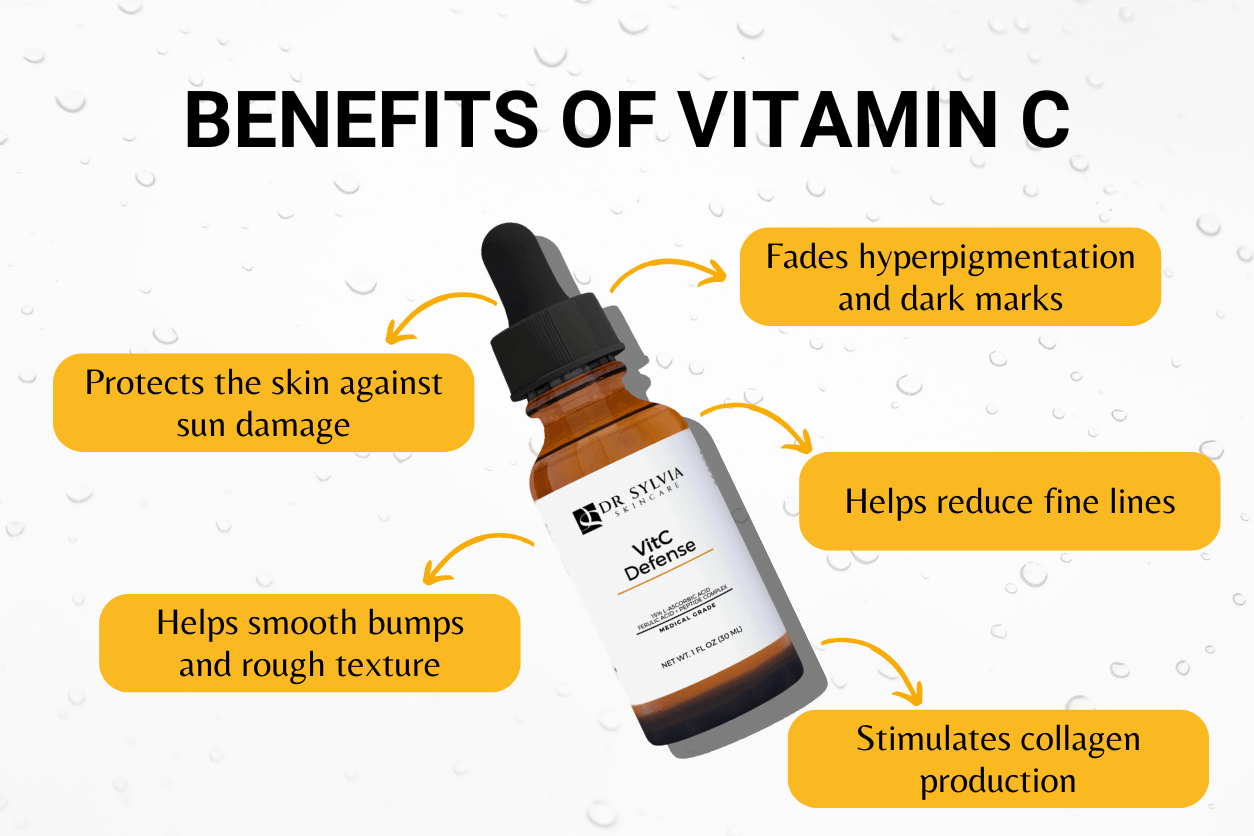
- Protects skin against UV-induced damage and free radical oxidative stress
- Brightens complexion and reduces dullness for a more radiant glow
- Fades hyperpigmentation, dark spots, sun spots, and post-acne marks
- Evens out uneven skin tone and improves overall skin clarity
- Stimulates collagen production to reduce fine lines and improve firmness
- Smooths bumps and rough skin texture
- Provides antioxidant defense against Singapore’s pollution and humidity
- Reduces redness and soothes inflammatory skin concerns
Should you apply Vitamin C serum to dry or damp skin?
One important thing to know about vitamin C is that it is an active and highly unstable ingredient. This means that outside elements, including air, light, and moisture, can easily affect or degrade it. Its high instability is also the reason why vitamin C serums are packed in dark, brown glass bottles.
The case for damp skin
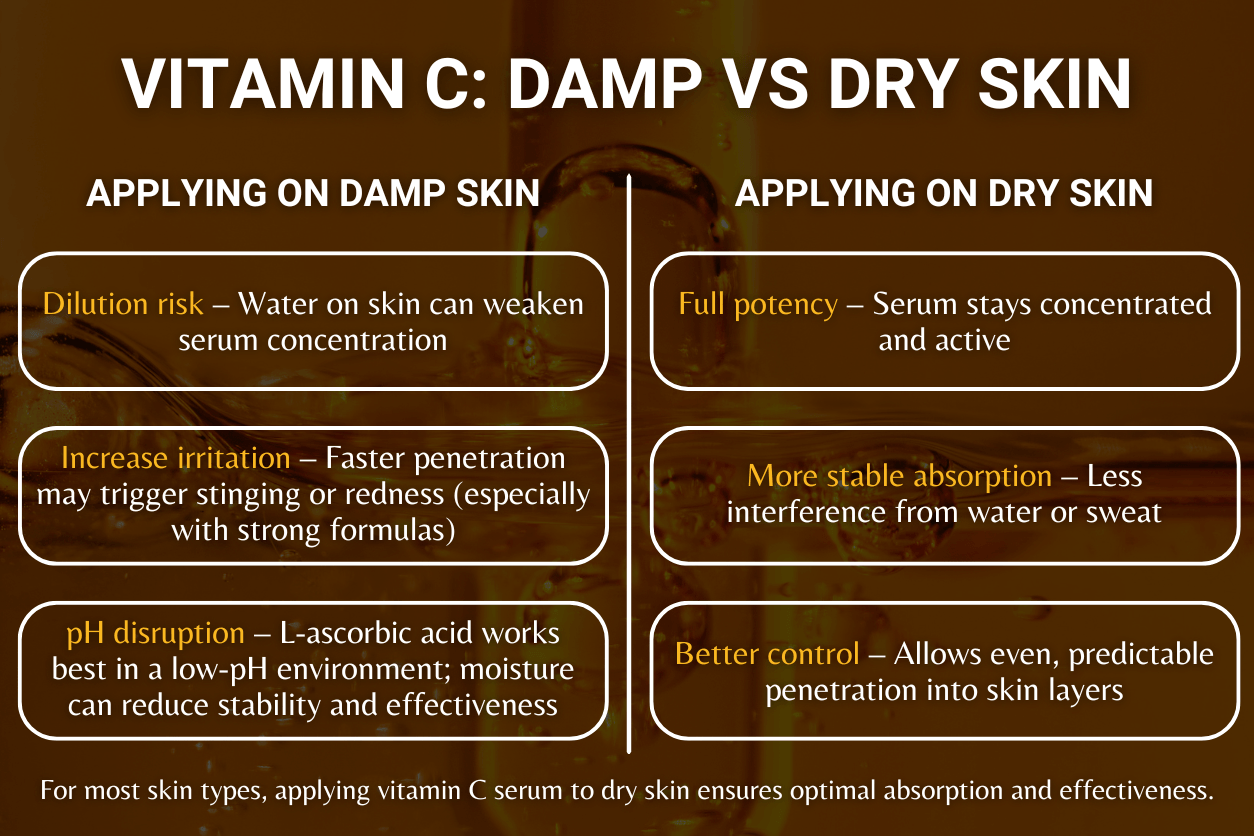
Moisture slightly swells the skin’s outer layer, making it more permeable and enhancing penetration and improving absorption. This may allow more of the serum’s active ingredient to reach the deeper layers. Some moisture on the skin can also help the formula to spread more easily and evenly.
Vitamin C, however, is also potent, and increased absorption can make it more irritating. This can potentially lead to redness, dryness, or stinging, especially if you have sensitive skin. It can also:
- Dilute the formula’s concentration
- Reduce the stability or efficacy of the serum (vitamin C is easily affected by water/moisture)
- Accelerate the product’s oxidation due to exposure to water
The case for dry skin
Dry skin is usually recommended for most skin types, mainly because it prevents the product from being diluted. As vitamin C needs to be stable to be effective, applying it to dry skin:
- Allows for controlled, optimal absorption
- Avoids rapid penetration, which can cause irritation or stinging
- Makes sure the formula remains stable and concentrated
- Minimizes the risk of vitamin C serum irritation and increased sensitivity
Are you using Vitamin C serum correctly?
Even the best vitamin C serum will underperform or cause problems, if it’s used incorrectly. Here’s how to get the most out of your formula.
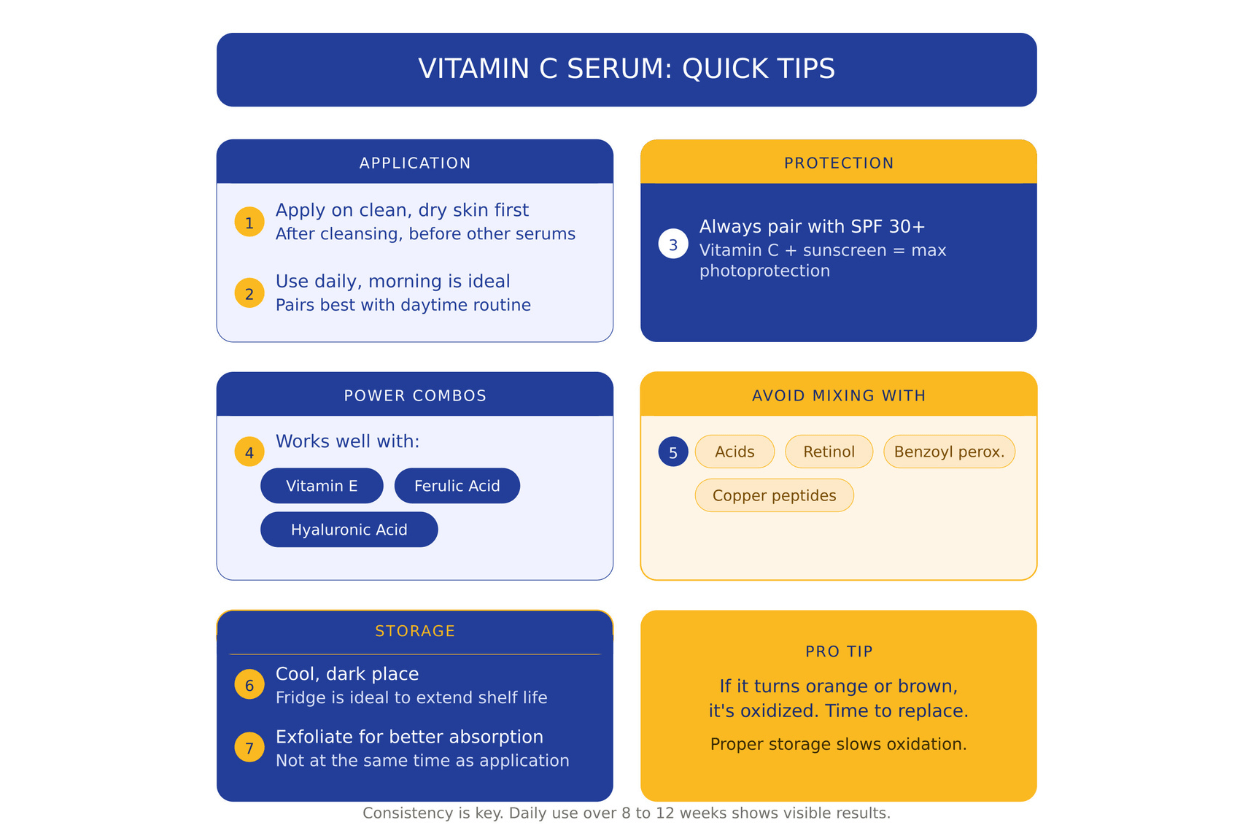
1. Apply it in the right order
Vitamin C serum should be applied on clean, dry skin as your first step after cleansing (and toning, if applicable). The correct layering order is:
- cleanser
- toner (optional)
- vitamin C serum
- moisturizer
- sunscreen (morning)
Applying it too late, like after heavy moisturizers, prevents it from making proper contact with the skin.
2. Use it daily
To reap all the benefits of vitamin C serum, use it daily. It is recommended for daytime use due to its free radical fighting properties. This protects your skin from damage due to UV rays and pollution. Just be sure to apply it on a clean face every morning, followed by a moisturizer and a broad-spectrum sunscreen.
You can get the most benefit from using the serum in the morning because of the high levels of UV radiation. You can still, however, also use the product at night if you want to. It is also important to take note that skin care products like serums are most effective with properly exfoliated skin.
3. Team it up with sunscreen
Higher concentrations of vitamin C serum are vulnerable to sun exposure, so it is only important that you use it together with sunscreen. When applying during the day, layer it under a broad-spectrum formula with an SPF of at least 30. Using it under a sunscreen can protect the skin further and maximize the product’s effectiveness.
Take note: UV exposure darkens your skin, so skipping sunscreen negates the brightening benefits of this serum. The application of vitamin C serum and sunscreen is also more effective at neutralizing free radicals instead of just using sunscreen on its own.
4. Know the best ingredients to pair with
To enhance the benefits of vitamin C, look for serums formulated with these actives, or layer them together:
- Vitamin E (Tocopherol) – stabilizes vitamin C and helps increase the skin’s hydration benefits and protect it from scarring and pigmentation.
- Ferulic acid – increases vitamin C’s stability and effectiveness. It is also an antioxidant that can fight free radicals, and when added to vitamin C, it can help minimize sun damage and discourage photoaging.
- Vitamin B3 (niacin) – can help reduce fine lines and dark spots. It raises the lightening capabilities of vitamin C by reducing the skin’s pigment (melanin) visibility.
- Hyaluronic acid (sodium hyaluronate) – boosts skin hydration and reduces the risk of irritation when paired with active vitamin C.
5. Avoid Incompatible Ingredients
Mixing the wrong ingredients can cause vitamin C serum irritation, reduce efficacy, or destabilize the formula. Here are the vitamin C serum ingredients to avoid using at the same time as the product:
- AHAs and BHAs (glycolic acid, lactic acid, salicylic acid) – destabilize the skin’s pH balance and can compromise the serum’s effectiveness. You can use them at separate times of day or on alternate days.
- Retinol (Vitamin A) – both Vitamin A and C are potent actives that, when used together, can cause irritation.
- Benzoyl peroxide – can oxidize vitamin C, making it ineffective.
- Copper peptides – may negatively interact with vitamin C at the molecular level.
- Soap-based cleansers – may change the skin’s pH in a way that affects vitamin C absorption.
6. Store it properly
Vitamin C serums can lose their potency when oxidized or when the product is exposed to heat or sunlight. When this happens, you’ll see a change in its appearance, with the product turning from clear to brownish or cloudy. A rancid smell is also a sign that it has already oxidized.
To preserve potency: store the serum in its original opaque, airtight bottle in a cool, dark place. In Singapore’s warm and humid climate, keeping it in the refrigerator is ideal. Always keep the lid tightly closed after using and store it away from heat and sunlight.
7. Apply to exfoliated skin
Skincare actives like vitamin C serums work best on properly exfoliated skin. Gentle regular exfoliation removes the buildup of dead skin cells that can form a barrier and reduce product penetration. Just remember not to exfoliate and use vitamin C at the same time of day; you can alternate them to avoid irritation.
Can Vitamin C serum fade hyperpigmentation?
Hyperpigmentation is one of the most common skin concerns we see at our aesthetic clinic in Singapore. Sun spots, melasma, and post-inflammatory hyperpigmentation are not only slow to fade but also prone to recurrence.
And while Vitamin C serum is a clinically supported topical solution for hyperpigmentation, it’s important to understand both what it can and cannot do.
Understanding hyperpigmentation
Hyperpigmentation appears as darkened skin patches that vary in size and color. It commonly shows up on areas that are frequently exposed to the sun, such as the face, neck, shoulders, and back of hands. There are three main types:
- Sun spots or age spots – caused (and exacerbated) by sun exposure and show up as small, darkened patches in the skin.
- Melasma – also called the “mask of pregnancy” and is believed to be triggered by hormonal fluctuations, which are common among pregnant women.
- Post-inflammatory hyperpigmentation (PIH) – caused by trauma or injury to the skin, like acne, that heals and leaves the affected area discolored.
Having a darker complexion makes you more susceptible to hyperpigmentation because of higher melanin content in the skin. It occurs with excess or overproduction of the skin pigment and can be caused by several factors, including:
- Acne
- Overexposure to the sun
- Injury or trauma to the skin
- Hormonal changes (melasma, which is common in pregnancy)
How Vitamin C targets hyperpigmentation
Vitamin C attacks hyperpigmentation through its tyrosinase-inhibiting mechanism. It reduces melanin production at the source, slowly lightens existing spots, prevents new ones from forming, and helps even out skin tone over time.
For optimal results when using vitamin C for hyperpigmentation:
- Apply after cleansing – Make it your first serum in the morning, followed by moisturizer and sunscreen.
- Always use SPF – A broad-spectrum SPF 30–50 sunscreen applied daily is essential to prevent dark spots from worsening.
- Be patient and consistent – Initial improvements (brighter complexion, slight lightening) show about three to four weeks of daily use, with more visible results after three months or more.
- Combine with professional treatment – Vitamin C serum works best as part of a comprehensive approach that may include professional treatments like Pico laser, VI Peel, or tranexamic acid available at our clinic in Singapore.
Why your vitamin C Serum isn’t working
If you’ve been using vitamin C serum for weeks with minimal improvement, one of these common mistakes is likely the culprit. The good news is every one of them is fixable.
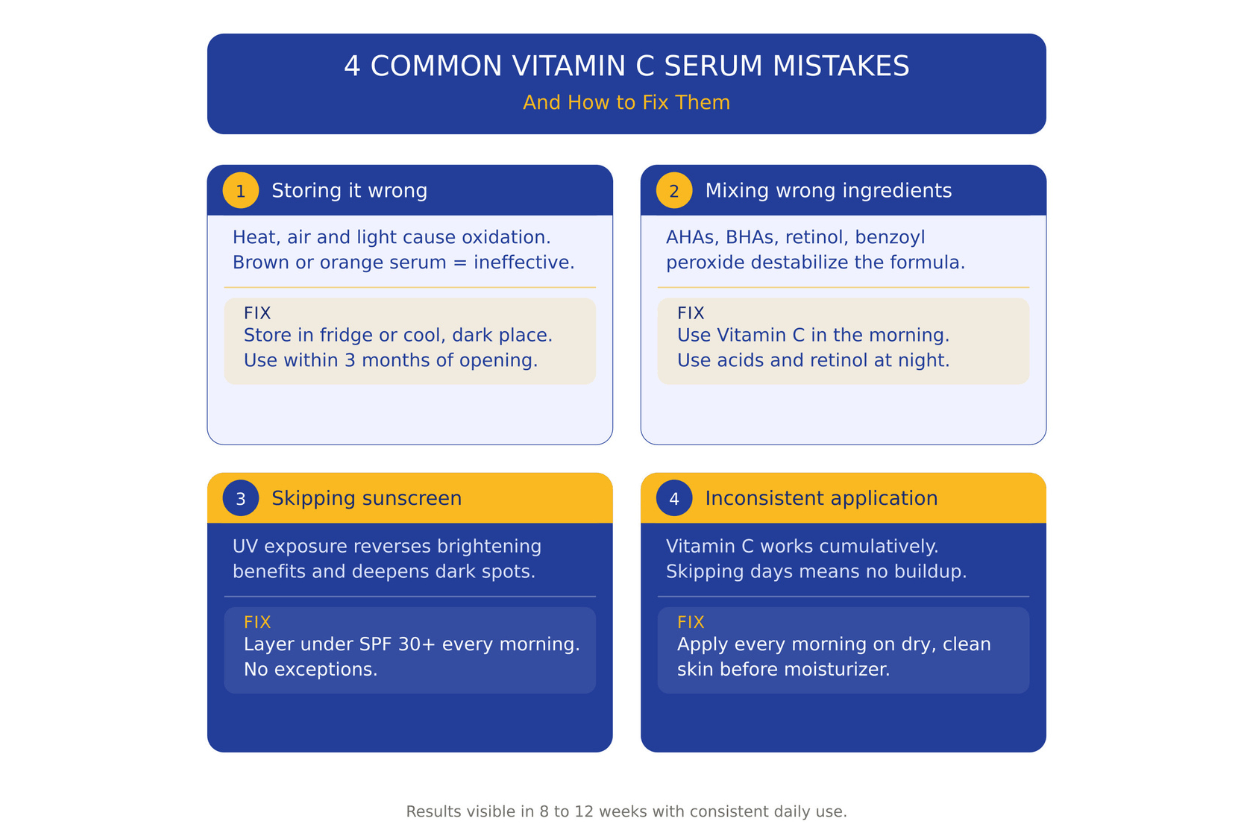
Mistake 1: You’re storing it incorrectly
Exposure to heat and sunlight causes oxidation, which can then affect the serum’s potency. You’ll know it when the product changes color, from clear to brown, or has a rancid smell. If you notice this with the one you’re using, it is time to throw it away.
The average life expectancy of vitamin C serums is about three months after opening. After this period, you can expect to see some browning in its color with less potency. It is recommended to stop using the product, as it is less effective and won’t make any difference to your skin.
Fix: Choose products that come in opaque and air-tight bottles/containers. This will help in keeping the product fresh and prevent overexposure to air. You should also store it in a dark, cool place (like the fridge) and away from direct sunlight.
Mistake 2: You’re mixing it with incompatible ingredients
Vitamin C is an extremely unstable acid that shouldn’t be combined with other acids (AHAs and BHAs). Mixing them can destabilize the pH balance of your skin and sabotage the serum’s effectiveness.
Fix: Use acids, retinol, and other actives at different times of the day from your vitamin C (like vitamin C in the morning, retinol at night). Or alternate them on different days.
Mistake 3: You’re not using sunscreen
Vitamin C serums are ideal for daytime use to protect your skin from damage due to UV rays and pollution. The issue is that vitamin C itself is photosensitive, which means UV rays can degrade it and reduce its effectiveness.
Fix: Layer vitamin C serum under a broad-spectrum sunscreen with SPF 30 or higher every morning. This combination is significantly more effective at neutralizing free radicals than sunscreen alone.
Mistake 4: You’re not using it every day
Inconsistent use is one of the most common reasons vitamin C doesn’t deliver visible results. Vitamin C works cumulatively, meaning it needs to maintain a consistent presence in the skin to build antioxidant protection, suppress melanin production, and stimulate collagen synthesis.
Fix: Use the product every day. Apply it after cleanser, before moisturizer and sunscreen. If you find the serum irritating at full daily use, start with alternate days and gradually increase frequency.
What to look for in a Vitamin C serum?
Searching for terms like “best vitamin C serum Singapore” can quickly feel overwhelming. With so many products out there, it helps to know which ingredients matter. A little research can make choosing the right vitamin C serum much easier.
- Form – Vitamin C is available in different forms and labels. L-ascorbic acid is water-soluble and is said to be the most active form of vitamin C. It helps support collagen synthesis, as well as thickens the skin and reduces the appearance of lines. And as a potent antioxidant, it is beneficial in combatting free radicals and reducing oxidative stress.
- Concentration – The recommended vitamin C concentration level (L-ascorbic acid) is 10 to 20%. Make sure to look for a product with a concentration higher than 8%, which is the minimum amount considered effective.
- If you’re just starting, go with a concentration of 10% and increase it to 15 to 20%. Do take note that you don’t need a concentration above 20%, as this does not increase its benefit and can lead to redness and irritation.
- Ingredients – Vitamin C is often used alongside other ingredients to help stabilize it and increase its effectiveness. It works well with the active ingredients mentioned above, including vitamin E, ferulic acid, vitamin B3 (niacin), and Vitamin B5 (pantothenic acid.
- Packaging – Vitamin C is unstable and can degrade quickly, especially with exposure to air, light, and heat. So, look for a product that comes in a dark or opaque glass bottle. Avoid those that are stored in jars, because it is likely that product will be exposed to air every time you use it. Also, go with a glass bottle with an airtight medicine dropper instead of an air pump.
Our Vitamin C serum recommendation: VitC Defense
At Cutis Medical Laser Clinics in Singapore, we have VitC Defense, a potent antioxidant serum developed to deliver brightening and anti-aging results. It features carefully selected ingredient combinations to help with the most common skin concerns.
VitC Defense: Key Ingredients
|
This formulation:
- Boosts collagen production and improves skin firmness
- Reduces hyperpigmentation and dark spots
- Provides antioxidant defense against UV, humidity, and pollution
- Protects against photoaging and premature skin aging
- Enhances skin radiance for a brighter, more even complexion
Can vitamin C make you sun sensitive?
It is just a myth that vitamin C can make you sensitive to the sun’s UV rays. Unlike other active ingredients like retinol and hydroxy acids, it does not make you more prone to sun damage or cause your skin to burn faster. In fact, vitamin C is an antioxidant that can help protect the skin against UV damage.
The deal with L-ascorbic acid
The purest form of vitamin C (L-ascorbic acid) is known to be very unstable. This means that when the product is exposed to the sun, the ingredient can oxidize and break down easily. This is also the reason why vitamin C is often used with other ingredients to help stabilize it.
The issue with some forms of vitamin C
Tetrahexyldecyl (THD) Ascorbate, a stable form of vitamin C, is sometimes mistaken for (or grouped with) alpha hydroxy acids (AHAs). AHAs are known to increase the skin’s sensitivity to the sun and increase sun damage and pigmentation. THD is actually stable, oil-soluble, and doesn’t oxidize or break down rapidly once you use the bottle.
When Vitamin C serum alone isn’t enough: Professional treatments in Singapore
While a quality vitamin C serum can help you maintain healthy, radiant skin, topical skincare can only do so much. This is especially true if you’re dealing with stubborn hyperpigmentation, deep melasma, and significant sun damage.
This is where professional aesthetic treatments available at our clinic on Scotts Road, Singapore, can help make a difference.
Pigmentation treatments available in Singapore:
- Pico Laser – Breaks down pigment particles with minimal downtime; ideal for stubborn pigmentation, including melasma, sun spots, and PIH
- Tranexamic acid– A prescription-strength skin brightener that works with topical vitamin C for pigmentation management.
- VI Peel / Chemical Peels – Medical-grade chemical peels help accelerate cell renewal, lighten dark spots, and improve overall skin tone and texture.
- Photo Facial (IPL) – Intense Pulsed Light helps target sun damage, redness, and uneven skin tone for a glowing complexion.
A personalized treatment plan from one of our aesthetic doctors in Singapore can combine professional treatments with a targeted skincare routine. This is beneficial in achieving results that topicals alone cannot.
Quick reference: Vitamin C Serum Do’s and Don’ts
| ✓ DO | ✗ DON’T |
| Apply to clean, dry skin | Apply to damp or wet skin |
| Use every morning before sunscreen | Skip sunscreen after application |
| Pair with Vitamin E and Ferulic Acid | Mix with AHAs, BHAs, or retinol at same time |
| Store in fridge or cool, dark place | Leave in hot, sunny spots or bathrooms |
| Use within 3 months of opening | Use oxidized (brown/cloudy) serum |
| Choose SPF 30+ broad-spectrum sunscreen | Rely on DIY or natural oil sunscreen |
| Be patient, results take 4–12 weeks | Expect overnight results |
Start your journey to brighter, healthier skin in Singapore
At Cutis, our aesthetic doctors are here to guide you. Whether that means recommending the right vitamin C formulation for your skin type, addressing hyperpigmentation with clinical treatments, or building a complete skincare plan, we can help.
WhatsApp us today at +65 9780 2079 to learn more or schedule a consultation.
To share, click on the Icon.