
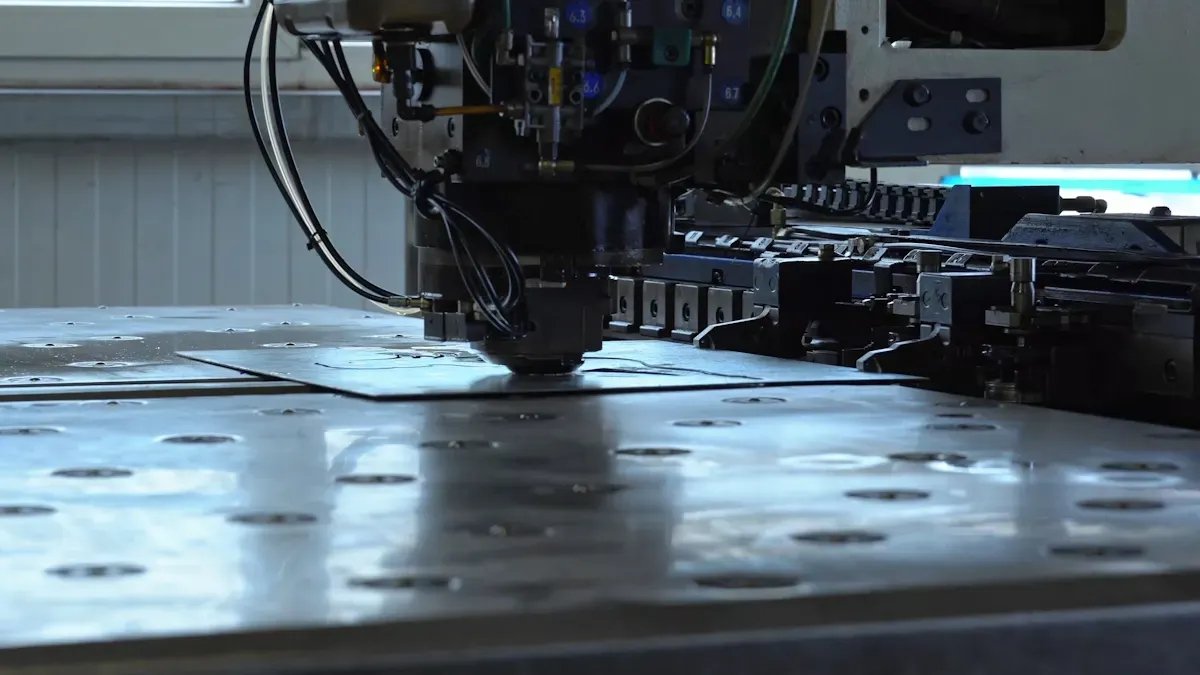
Pin Punch Description
After you use a drive punch to start moving a pin, you switch to a pin punch. This tool has a straight shank and a flat face. The pin punch fits into the hole and pushes the pin or bolt all the way out. You need to pick a pin punch that is one size smaller than the pin. This keeps the side walls of the hole safe.
Use a pin punch that is one size smaller than the pin being driven to prevent damage to the side walls containing the pin.
Pin punches help you finish the job that a drive punch starts. You use them when you want to remove a pin or bolt without hurting the hole.
Pin Punch Uses
You use pin punches in many precision jobs. In metal stamping, you use them for piercing, trimming, blanking, and forming. In automotive work, you use a pin punch to remove brackets, connectors, or reinforcement parts from a hole. Electronics makers use pin punches to work on mobile device frames, PCB metal parts, and battery parts. In general industry, you use pin punches for sheet metal, small hardware, and automated stamping systems. Pin punches help you finish removing pins or bolts from a hole after you start with a drive punch.
|
Piercing, Trimming, Blanking, Forming |
|
|
Brackets, Connectors, Reinforcement parts |
|
|
Electronics Precision Manufacturing |
Mobile device frames, PCB metal components, Battery structural parts |
|
General Industrial Tooling |
Sheet metal fabrication, Small hardware production, Automated stamping systems |
Tip: In boxing, you need the right punch for each move. In the workshop, you need the right punch to remove a pin or bolt from a hole. Using the right tool helps you work faster and keeps your parts safe.