

3 Key Takeaways
- Melasma is chronic and complex. It develops deep within the skin with several triggers, such as sun exposure and hormones. These make melasma difficult to treat and prone to recurrence.
- Home remedies offer limited results and lack strong evidence. Ingredients like turmeric and aloe vera may provide mild, surface-level improvement, but don’t have enough scientific evidence and consistency.
- Evidence-based treatments work best. Effective melasma management combines sun protection, clinically proven ingredients, prescription treatments, and professional procedures like lasers or chemical peels.
When it comes to skin dullness or a tired-looking appearance, hyperpigmentation is one of the most common culprits. Melasma, for instance, is a common skin condition that causes dark or uneven patches (brown to gray) on the cheeks, forehead, and nose. While this isn’t harmful, people want to lighten these patches for cosmetic reasons.
So, what is the best treatment for melasma in Singapore? While prescription-strength creams and aesthetic treatments like Pico Laser and chemical peels provide optimal results, many are wondering if home remedies actually work. Although some DIY treatments claim fading, the real answer is more complicated than their promises.
Continue reading as our aesthetic clinic in Singapore shares what research says about home remedies, triggers, and melasma treatment that actually works.
Why is melasma difficult to treat?
Unlike certain types of pigmentation, melasma exists and develops deep within the skin, which topical creams cannot penetrate. Other reasons why it is more challenging to treat include:
- Melasma is chronic. These dark patches can fade but can recur even with minor sun exposure, particularly during summer.
- Many triggers are persistent and hard to eliminate. These include sun exposure, hormonal changes, and heat, all of which are inevitable and part of life.
- Some treatments can worsen pigmentation. Harsh creams, over-exfoliation, and wrong lasers can cause irritation and inflammation that increases pigmentation.
- Melanin reduction is a slow process. It involves more than just removing surface pigment. The process requires consistent or disciplined treatment, as well as sun protection.
What are the most common triggers of melasma?
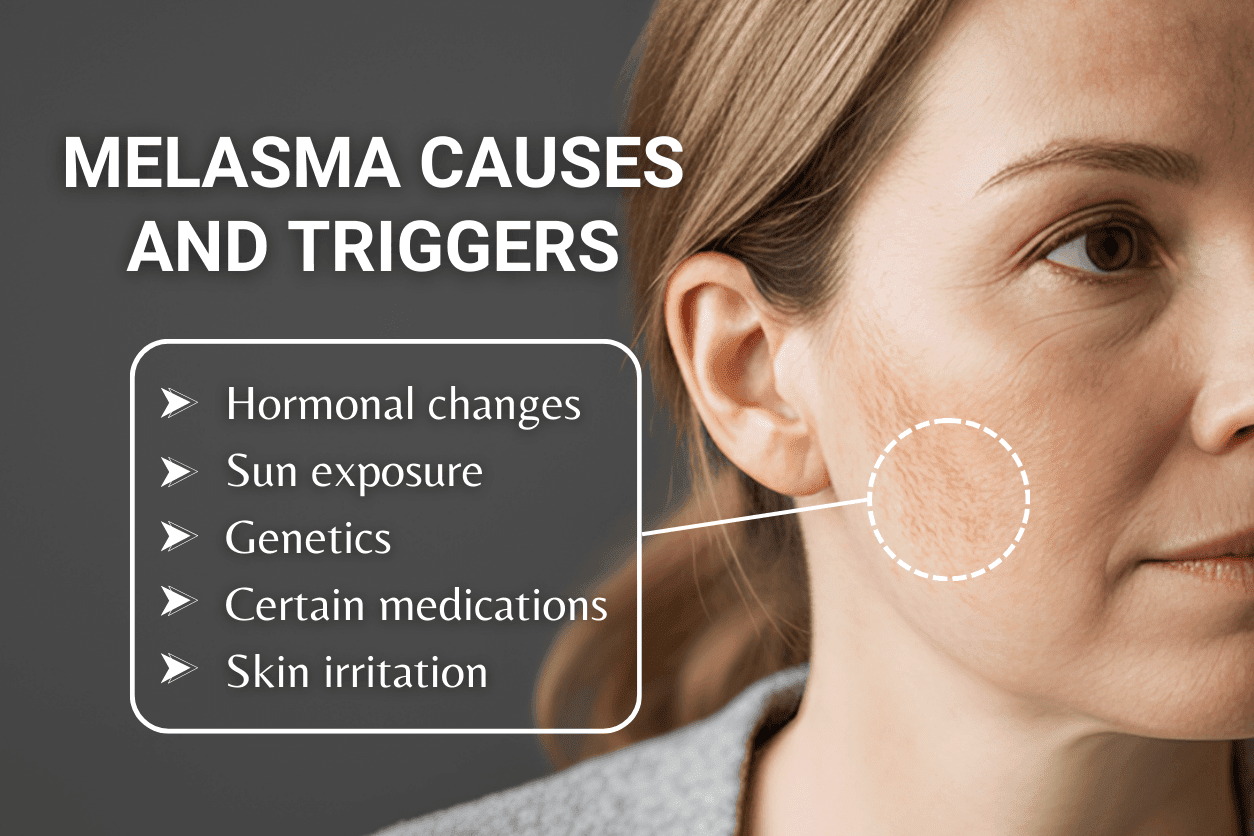
- Hormonal changes – hormonal fluctuations (increase in estrogen and progesterone) can stimulate pigment production. This is why melasma commonly appears during pregnancy, and is referred to as a “mask of pregnancy”.
- Sun exposure – UV radiation stimulates pigment-producing cells, which darken existing patches or pigmentation. It is important to know that even with the best melasma treatment, it can fail without proper sun protection.
- Genetics – the condition frequently runs in families, and many people with melasma report a family history of it. Having a parent, sibling, or other close relative with melasma increases your likelihood of developing it.
- Medications – certain medications can worsen pigmentation and increase sun sensitivity. These may include certain antibiotics, (regular use of) Nonsteroidal Anti-inflammatory Drugs (NSAIDs), blood pressure medications, and anti-seizure drugs.
- Skin irritation – harsh products, over-exfoliation, and wrong skincare products may trigger inflammation that can darken pigmentation.
Do home remedies actually work?
While many promote natural or home remedies for melasma, many lack strong scientific evidence. Some natural ingredients have shown mild pigment-lightening properties in small studies, including:
- Turmeric – contains an active compound called curcumin that can help in melasma management. Studies show that this compound can help inhibit tyrosinase, the enzyme responsible for producing melanin. Curcumin, furthermore, is said to reduce inflammation and offer protection from free radicals.
Do take note that formulation matters. Refined turmeric (in serums and creams) is considered more stable and effective than raw or homemade turmeric pastes. It is also recommended to pair it with one beneficial ingredient (Vitamin C, niacinamide, or kojic acid) and should only be used for a short amount of time.
Turmeric may also be helpful only for surface-level melasma and not deep-seated patches. And while generally safe, it can leave a temporary yellow tint on the skin and may cause allergic reactions in some people.
- Aloe vera – when used in specialized or concentrated formulations, aloe vera may slightly improve skin tone and reduce pigmentation. It contains compounds like aloesin and aloin that may help lighten pigment by inhibiting tyrosinase.
In addition, aloe vera has anti-inflammatory and antioxidant properties that soothe and help protect the skin. Studies, however, suggest using specialized aloe vera cream or liposomal formula instead of using just raw plant gel, as they penetrate the skin’s barrier more effectively.
Aloe vera is considered safe and well-tolerated, but there are studies and trials that have found it ineffective in producing significant results.
Research regarding these treatments is limited, with improvements that tend to be much slower, subtler, and less consistent than medical treatments.
Which home remedies may make melasma worse?
Be wary of home remedy concoctions you see online. Some popular DIY treatments can cause irritation and exacerbate existing pigmentation. This is especially true if you have sensitive or darker skin tone.
Make sure to avoid applying these remedies directly to your skin:
- Lemon juice – is highly acidic and can compromise the skin barrier, causing burning and stinging. Melasma is also reactive, and the inflammation caused by the lemon juice can trigger the melanocytes to produce more melanin. It also makes your skin more sensitive to the sun.
- Apple cider vinegar – is also highly acidic, which can cause inflammation, irritation, and skin burning. This can also stimulate increased pigment production, which darkens existing patches instead of lightening them. Household ACV, furthermore, has unpredictable levels of acidity, making safety a huge concern.
- Raw onion or garlic – both are irritating agents that can trigger inflammation and cause the melanocytes to become overactive. There is also the risk of stinging and redness that may lead to contact dermatitis.
These ingredients are highly acidic and can trigger irritation, which may lead to post-inflammatory hyperpigmentation, making melasma darker instead of lighter.
What science says helps
If you want to see more visible improvements, skincare experts typically recommend evidence-based treatments. These include sun protection, brightening agents, prescription topicals, and aesthetic treatments.
Sun protection
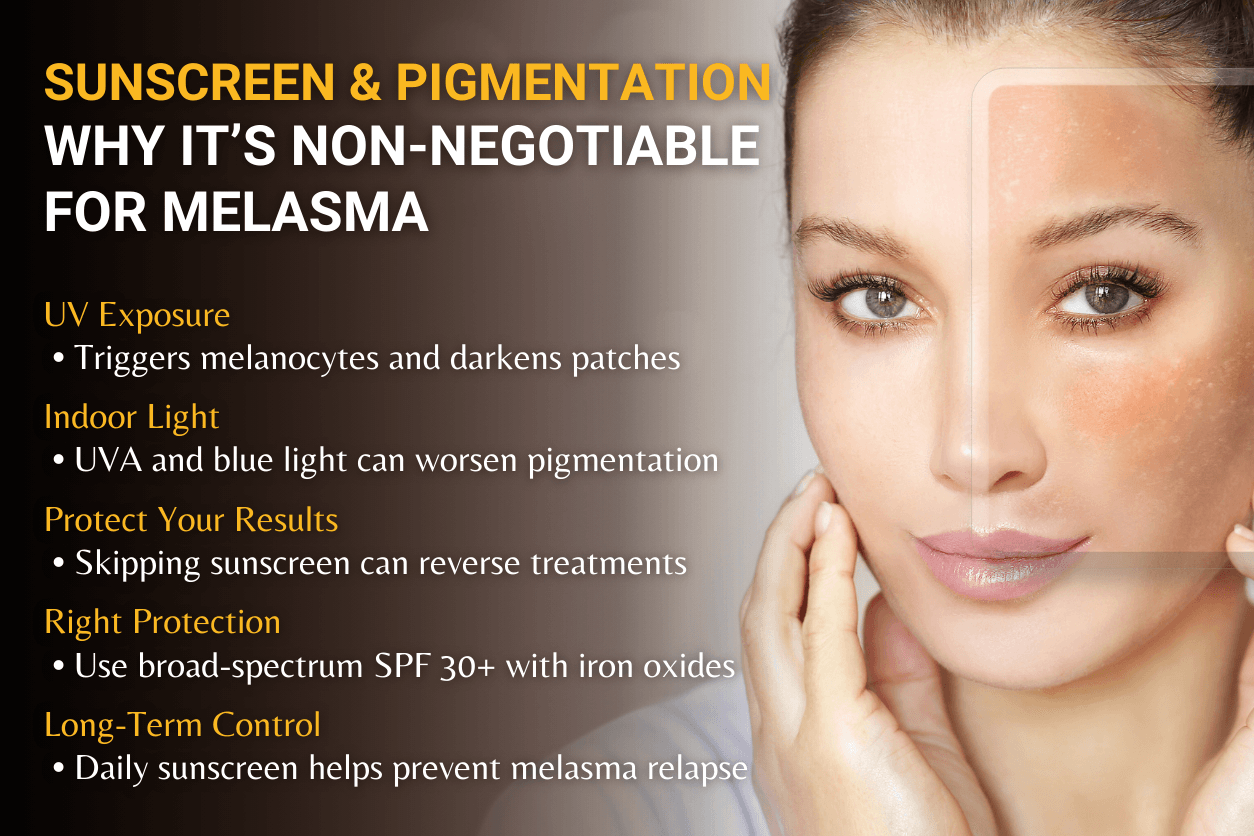
Without proper sun protection, no melasma treatment can last long or work effectively. Here’s why SPF is essential for hyperpigmentation and melasma management:
- UV rays stimulate melanocytes, pigment-producing cells. Even just a few minutes of sun exposure can darken existing patches and cause hyperpigmentation.
- Pigmentation can worsen indoors without sunscreens. This is because UVA rays can penetrate glass windows and damage the skin. Blue light from electronic devices can also worsen hyperpigmentation and contribute to skin aging.
- Skipping sunscreen can undo the results of your melasma treatment. This can lead to rebound pigmentation or cause your patches to recur within weeks.
- Melasma and hyperpigmentation are chronic conditions. Sunscreen and other sun protection measures prevent relapse and keep pigmentation under control.
Over-the-counter ingredients
Some skincare ingredients help reduce inflammation, increase cell turnover, and inhibit melanin production. These include:
- Vitamin C
- Niacinamide
- Kojic acid
- Licorice extract
- Glycolic acid
Several months of consistent use is essential to see improvements. They can also be used to supplement your professional melasma treatment.
Prescription treatments
Over-the-counter treatments are not enough to treat moderate or stubborn melasma. Stronger, prescription treatments are often recommended.
- Hydroquinone – usually in 4 % concentration can reduce melanin production and treat different types of hyperpigmentation. Hydroquinone in Singapore is only available through prescription and must be used under medical supervision.
- Oral tranexamic acid – lightens dark spots and inhibits melanin production. Studies show it can help lighten moderate to severe melasma, with results often showing 8 to 12 weeks of treatment. A medical professional must review your medical history and risk factors before prescribing.
- Tretinoin – accelerates skin cell turnover to help improve skin tone. This is often used in combination with hydroquinone and corticosteroids for faster results.
- Azelaic acid – targets overactive melanocytes, helps even skin tone, and is sometimes used as an alternative to hydroquinone. Some studies suggest that 20% azelaic acid is comparable in effectiveness to 4% hydroquinone for treating PIH and melasma.
In some cases, doctors may prescribe combination creams that contain multiple active ingredients to improve results.
Professional treatments
In-clinic procedures are recommended when topical treatments are not enough. At Cutis, we have several treatments that can lighten pigmentation and improve overall skin quality.
- Chemical peels – we have the VI Peel Precision Plus, which is a chemical peel formulated for melasma, sun damage, and PIH.
- Microdermabrasion – speeds up cell turnover and gradually fades hyperpigmentation. It can also stimulate cell renewal to improve skin tone and texture.
- Pico Laser – uses ultra-short pulses with less heat to shatter pigment into smaller particles. It can target deep melanin without causing thermal damage to surrounding skin tissue.
As aggressive and incorrect procedures can trigger additional pigmentation, aesthetic treatments must be performed carefully by a qualified medical professional.
While some claim home remedies for melasma work, most lack strong scientific evidence. The most effective approach is usually a combination of daily sun protection, doctor-recommended skincare, and medical treatments.
With patience and consistent care, it’s possible to fade melasma and improve overall skin tone. WhatsApp us today at +65 9780 2079 for a tailored treatment plan with one of our aesthetic doctors in Singapore.
To share, click on the Icon.