Shift Toward Data-Driven Beam Modulation and Closed-Loop Monitoring Reshapes Laser Welding
Advanced beam modulation and real-time monitoring are transforming laser welding from a manual craft into a predictable, data-driven engineering discipline.
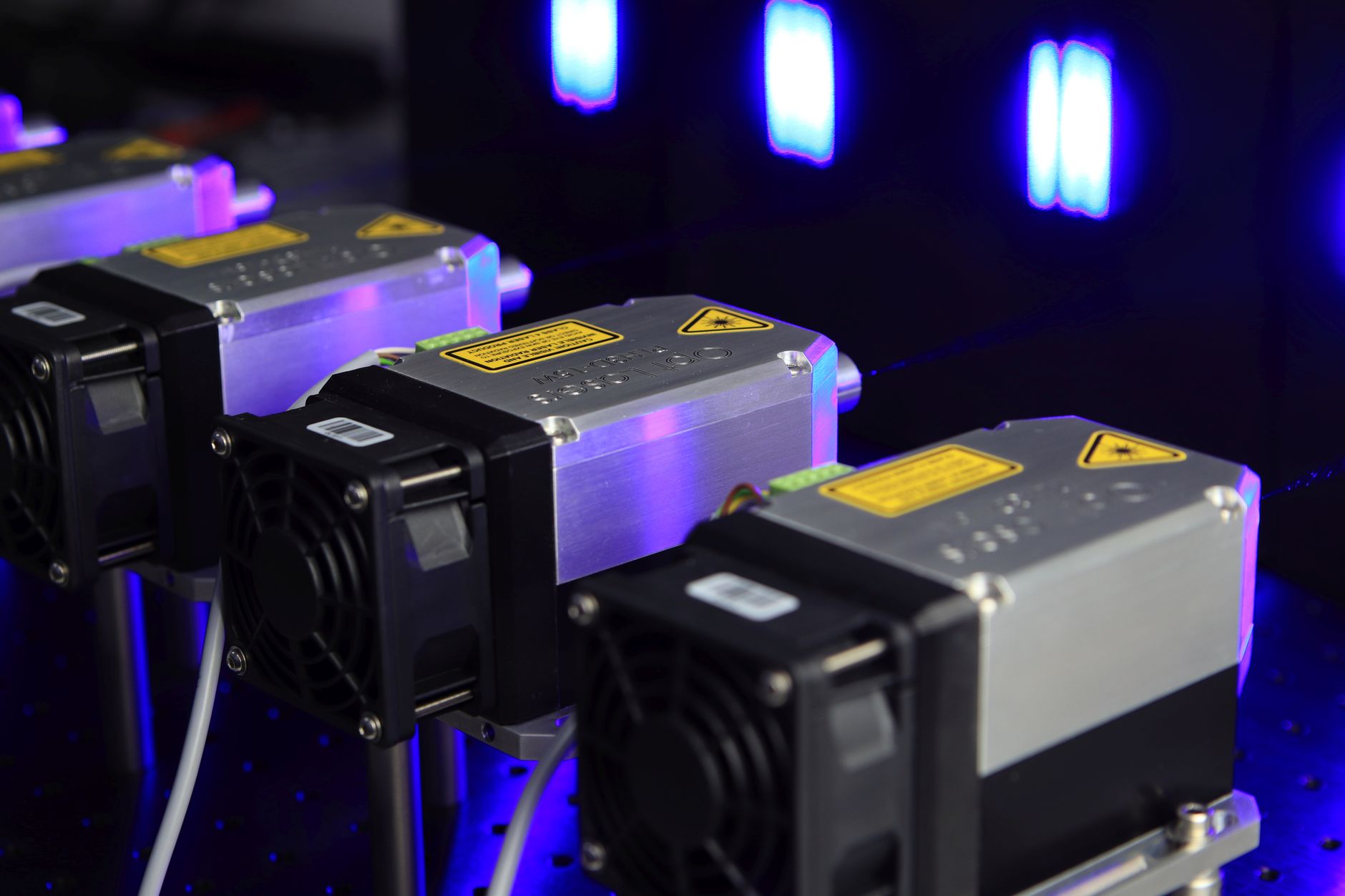
The laser welding landscape is undergoing a structural shift as manufacturers move away from purely manual processes toward integrated, data-driven automation. Recent advances in beam modulation, real-time optical monitoring, and closed-loop power control have transformed how high-reflectivity materials and dissimilar metal joints are processed at scale. This evolution is particularly evident in electric vehicle battery assembly, where precision thermal management directly dictates cell longevity and safety margins.
Beam Modulation and Keyhole Stability
Traditional continuous-wave fiber lasers often struggle with inconsistent penetration when joining aluminum alloys or copper interconnects. By introducing high-frequency oscillation patterns into the focal spot, modern systems create controlled melt-pool dynamics that actively suppress keyhole collapse. This technique, frequently referred to as wobble or orbital scanning, distributes thermal energy more uniformly across the joint interface. The resulting reduction in spatter and hydrogen entrapment allows thinner gauges to be welded without sacrificing structural integrity. For production lines handling multiple part geometries, programmable scan heads enable rapid parameter switching without mechanical repositioning. Engineers now prioritize modulation frequencies between five hundred and three thousand hertz, selecting waveforms that match the thermal conductivity of each substrate while maintaining a stable vapor cavity.
Closed-Loop Monitoring and Process Intelligence
Quality assurance has transitioned from post-weld inspection to continuous in-process verification. Modern welding cells integrate coaxial spectrometers, photodiodes, and high-speed imaging sensors to track plasma emission, back-reflected light, and melt-pool geometry in real time. When deviations exceed predefined thresholds, control algorithms automatically adjust laser power, travel speed, or shielding gas flow before defects propagate. This feedback architecture significantly reduces scrap rates in high-volume manufacturing environments. The economic impact extends beyond defect elimination; predictive analytics derived from monitoring streams allow maintenance teams to schedule lens cleaning and source recalibration during planned downtime rather than reactive stops. As machine learning models ingest larger datasets, pattern recognition becomes increasingly capable of identifying subtle thermal anomalies that precede porosity or lack-of-fusion failures.
Hybrid Integration and Automation Economics
Remote galvanometer-based systems continue to replace traditional robotic arms in applications requiring fast cycle times and minimal fixturing. By projecting the focal point across large workpieces via reflective polygon mirrors, these setups eliminate toolpath limitations while maintaining micron-level repeatability. In parallel, hybrid laser-arc configurations are gaining traction for thick-section automotive structural components, combining deep penetration with improved bead profile control. The integration of handheld laser sources into semi-automated workflows has also matured, offering operators guided aiming aids and preset parameter libraries that reduce dependency on specialized training. Despite higher upfront capital expenditure for sensor-equipped cells, total cost of ownership calculations consistently favor automated architectures when throughput demands exceed two hundred parts per hour. Manufacturers adopting unified software platforms report streamlined changeover procedures and consistent traceability across all weld zones.
This article was produced by the LasersNews AI desk and reviewed by our editors.
Related reading

Remote Laser Welding Systems Converge on Dynamic Beam Shaping and Closed-Loop Monitoring
Advanced remote laser welding systems are merging dynamic beam shaping with real-time optical monitoring to m…

Handheld laser welding grows up as fume, safety and training catch up to the hardware
The tool that upended small-shop fabrication is now facing the unglamorous engineering work that decides whet…

Wobble optics widened the fit-up window, and that is why handheld welding works
Oscillating the beam across the joint trades a little power density for a much larger tolerance to gaps — the…