Pump diode lifetime, not fiber, dominates source economics
The gain fiber outlives the machine. The diodes that pump it degrade predictably with junction temperature, which makes cooling design an economic decision.
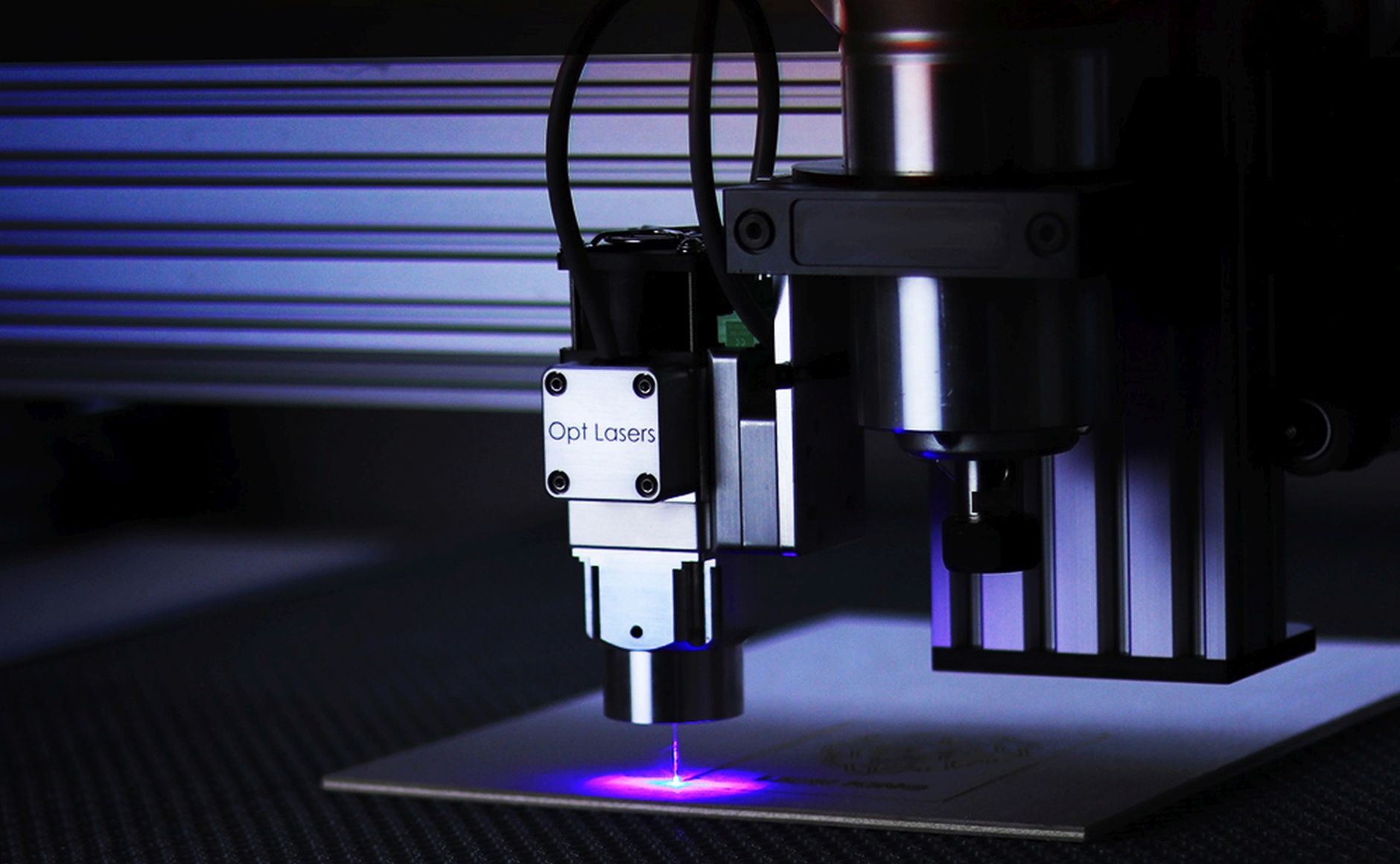
Ask what limits a fiber laser's service life and the intuitive answer is the fiber. In practice, doped gain fiber in a properly sealed source is remarkably stable. The wear item is the bank of pump diodes that supply optical energy to it.
How diodes age
Semiconductor laser diodes degrade gradually rather than failing outright. Output at a given drive current declines over time, so the control system raises current to hold power constant, which increases junction temperature, which accelerates degradation. End of life is usually defined as the point where rated power can no longer be reached within safe current limits.
The degradation rate is strongly temperature dependent. A commonly cited rule of thumb is that every ten degrees of junction temperature reduction roughly doubles expected lifetime — which makes thermal design the single largest determinant of how long a source lasts.
What this means operationally
Rated lifetimes of 100,000 hours assume the diodes are held at their design temperature. Real installations frequently do not achieve that. A chiller with fouled heat exchangers, a coolant loop with degraded flow, an ambient temperature above specification in an unventilated enclosure, or a filter nobody changed — each raises junction temperature and each shortens life in a way that shows up years later as a source that no longer reaches full power.
The maintenance implication
Chiller maintenance is the highest-leverage preventive activity on a fiber laser, and it is routinely neglected because the consequences are slow and invisible. Coolant chemistry matters too: the wrong coolant or a neglected inhibitor package causes corrosion in cooling passages, restricting flow.
What buyers should ask
Useful questions concern derating and monitoring rather than headline lifetime. Does the source log diode current and temperature over time? Can that log be read to assess remaining life before buying a used machine? Is there a defined derated operating mode that extends life when full power is not needed?
A source run continuously at full rated power in a warm room will not achieve its published lifetime, and no purchase specification changes that.
This article was produced by the LasersNews AI desk and reviewed by our editors.
Related reading
Beam shaping moves from option to standard feature on industrial fiber sources
Adjustable ring-mode and multi-core output are changing what a source is expected to deliver, and the change…
Adjustable ring mode stopped being a premium option
Splitting output between a central core and a surrounding ring gives one source several process personalities…

M² tells you less about a process than the number's prominence suggests
Beam parameter product is a real physical quantity and a poor single-number summary. Two sources with the sam…