Multi-laser powder bed fusion hits a qualification gap, not a hardware one
Machines with four, eight and twelve lasers are shipping. Proving that a part is identical wherever it was built is the harder problem.
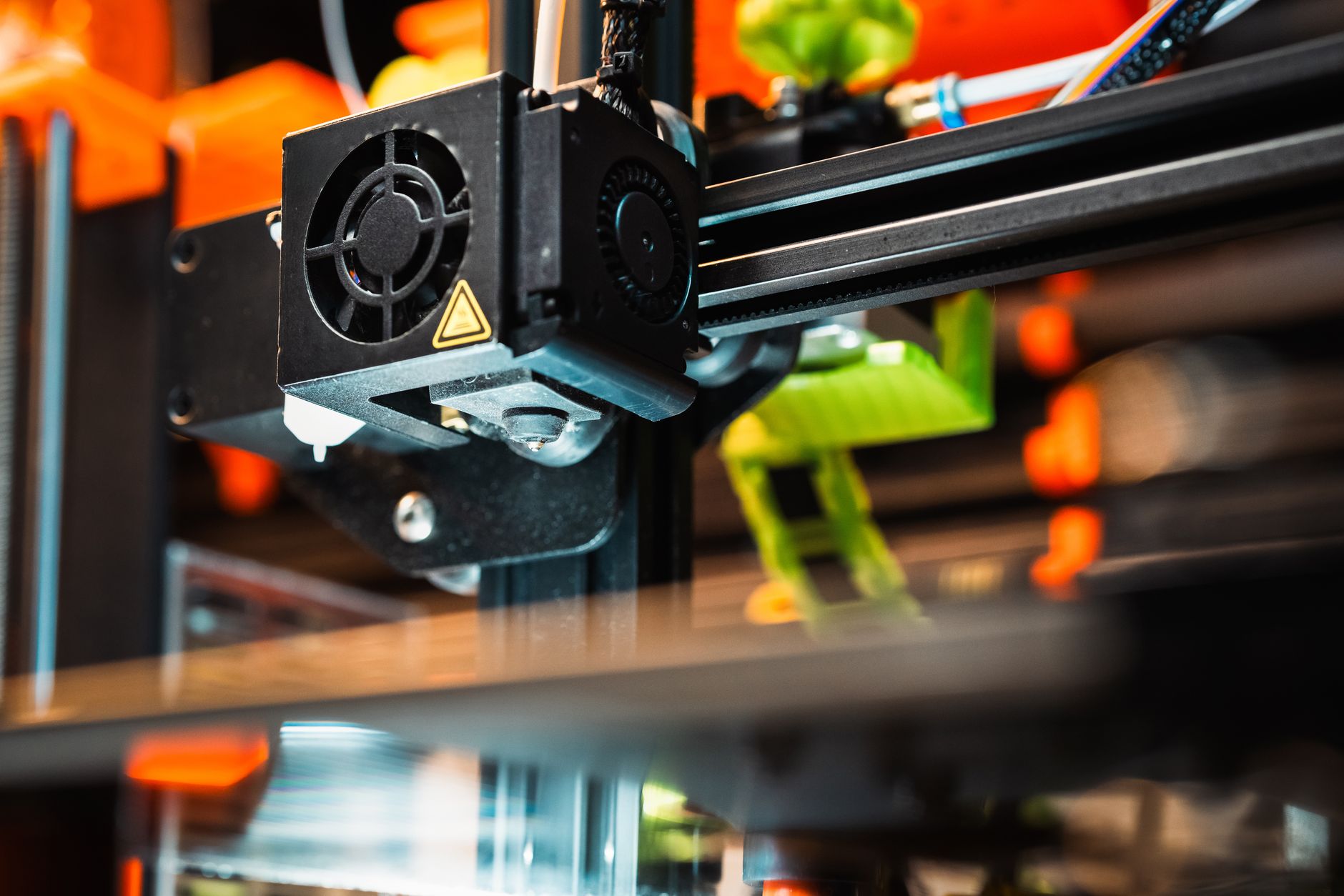
Laser powder bed fusion has answered its most persistent criticism. For years the technology was described as too slow and too expensive for anything but low-volume, high-value parts, and the standard response was to add lasers. Machines with four, eight and twelve sources scanning a shared powder bed are now commercially available, and build rates have improved accordingly.
The bottleneck moved rather than disappeared.
The stitching problem
When multiple lasers build a single part, their scan fields must overlap. Those overlap regions are where metallurgical questions concentrate. Slight differences in beam focus, incident angle, or local thermal history between two sources can produce a seam whose microstructure differs from the bulk material around it. For a decorative component this is irrelevant. For a fatigue-critical aerospace bracket or an implant, it is precisely the region an engineer will be asked about.
Calibration between sources — spatial alignment, power matching and focus consistency — has therefore become a routine maintenance discipline rather than a commissioning step.
Gas flow is the quiet variable
The second issue is process gas. Melting metal ejects spatter and generates a condensate plume. A single-laser machine can be designed so that flow sweeps this debris away from the active melt zone. With many lasers operating simultaneously across the plate, one laser's plume can drift across another's beam path, attenuating it and redepositing particulate onto powder that has not yet been melted.
The consequence is position-dependent quality: parts nominally identical, built in different regions of the same plate, showing different porosity. Chamber flow design and scan strategy scheduling — deliberately sequencing which lasers fire where and when — have become as important to consistency as the optics.
Why qualification is the real constraint
Aerospace and medical qualification frameworks were built around processes that are stable and demonstrably uniform. Demonstrating that a multi-laser build meets that bar means proving equivalence across the plate, across overlap regions, and across machines. That is a data problem: in-situ monitoring, melt pool observation, layer imaging, and enough statistical evidence to satisfy an auditor.
The industry consequence is a split. Non-critical industrial parts are already benefiting from multi-laser productivity. Flight- and body-critical parts are moving more slowly, gated not by how fast a machine can build but by how convincingly a manufacturer can show that it built the same thing everywhere.
Related reading

Multi-laser powder bed fusion has a seam problem at the overlap
Four, eight and twelve laser machines divide the build area between sources. Where their territories meet, th…
Powder reuse economics run into oxygen pickup
Unfused powder is most of what goes into a build. Reusing it is essential to the business case and gradually…
Directed energy deposition earns its living in repair, not in new parts
Building a component from nothing rarely beats machining it. Restoring a worn turbine blade or a damaged moul…