Low heat input is not the same as low distortion
Laser welding puts far less heat into a part than arc welding, and large assemblies still move. Sequence and restraint decide the outcome.
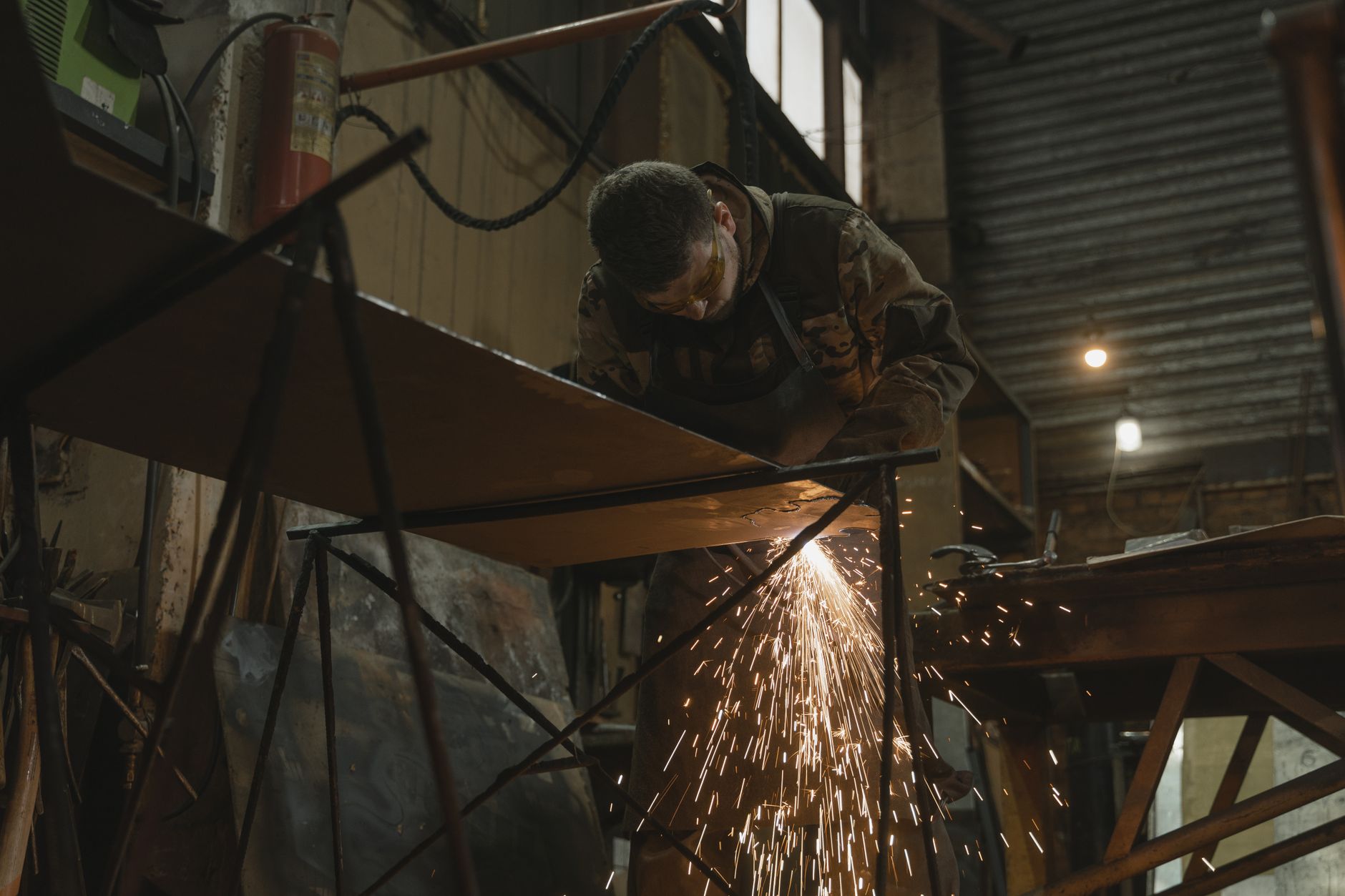
One of laser welding's headline advantages is low heat input, and the resulting reduction in distortion is real. Fabricators moving from arc welding routinely report less straightening work. What catches projects out is assuming that low distortion means no distortion.
Why parts still move
Distortion comes from non-uniform thermal expansion and contraction, and from residual stress redistribution. A laser weld heats a narrow zone intensely, and that zone contracts on cooling while the surrounding cold material resists.
The stress is concentrated rather than diffuse, which is different from arc welding but not smaller in every respect. On thin sheet, a narrow high-stress line can cause buckling that a wider, gentler heat input would not.
The parent material's own stress state matters too. Rolled, formed or previously welded material carries residual stress, and welding releases some of it. A part can move for reasons that have nothing to do with the weld's heat.
What controls it
Sequence. Welding order determines how stress accumulates. Balanced sequences — alternating sides, working from the centre outward, or back-step techniques — distribute contraction rather than letting it build in one direction.
Restraint. Fixturing holds the part during welding and cooling. Restraint reduces movement but increases residual stress, which can be released later during machining or in service. That trade is a genuine engineering decision, not a free win.
Cooling time. Releasing a part while hot allows movement; holding until cool prevents it at the cost of cycle time.
Weld placement. Symmetric placement around the neutral axis reduces bending, and designers can help substantially here.
Where laser genuinely wins
For thin, precise assemblies with short welds, the reduction versus arc welding is dramatic. For large weldments with long welds, laser reduces distortion but does not remove the need for sequence planning and fixturing.
Projects that budgeted no straightening at all, on the strength of the low heat input claim, have generally discovered this on the first large assembly.
This article was produced by the LasersNews AI desk and reviewed by our editors.
Related reading

Handheld laser welding grows up as fume, safety and training catch up to the hardware
The tool that upended small-shop fabrication is now facing the unglamorous engineering work that decides whet…

Wobble optics widened the fit-up window, and that is why handheld welding works
Oscillating the beam across the joint trades a little power density for a much larger tolerance to gaps — the…
Battery tab welding still comes down to the copper problem
Copper reflects most of the light a 1 µm source produces until it melts, then absorbs it suddenly. Green and…